


CHICLAYO-CAJAMARCA TOUR
Tour Description

PERU
BIRDING TOUR
ANY TIME*
| Duration: | 14 days, 13 nights |
| Group Size: | 2-4 |
| 2-3 Price: | $6000 |
| 4+ Price: | $5750 |
| Single Suppl: | $400 |
| Est #Species: | 475-525 |
| Pace: | Easy |
| Difficulty: | Easy |
| Best Time: | April-October |
| * This tour is available for any dates of your choosing provided guide services and accommodations are available. | |
DAY 1 - LIMA
Arrive at international airport in Lima and transfer to your hotel near the airport. Night at LimaQ Hotel.
DAY 2-3 - CHICLAYO & CHAPARRI
Morning flight to Chiclayo followed by transfer to Chaparri Reserve near Piura with some birding en route, arriving mid-day. Chaparri is a private reserve the arid region of northwestern Peru. The reserve protects a biodiverse dry forest in the Tumbesian region of Peru located 75 km. east of Chiclayo. The reserve was established to protect the endangered White-winged Guan, easily seen there, and Spectacled Bear, also commonly seen. Habitat is dry scrub and semi-deciduous forest. Some 39 species restricted to arid northwestern Peru and southeastern Ecuador, "Tumbesian endemics", are found in the reserve. A few are rare or only seasonally present, but most are resident and many are common or fairly common.
We'll devote the remainder of this day and the next day to birding at this site. Endemics expected there include Collared Antshrike, Marañon Antshrike, Tumbes Chat-Tyrant, Rufous Flycatcher, Baird's Flycatcher, White-tailed Jay, Black-capped Sparrow, Marañon Sparrow, White-headed Brushfinch, and Sulphur-throated Finch. In slightly higher humid forest, the rare and quite shy Ochre-bellied Dove occurs. and there is a good chance of seeing this species as well. A variety of other specialties found only in northwestern Peru and southwestern Ecuador are present in the reserve, including Gray-chinned Hermit, Guayaquil Woodpecker, Chapman's Antshrike, Rufous-necked Foliage-gleaner, Henna-hooded Foliage-gleaner, Gray-breasted Flycatcher, Plumbeous-backed Thrush, and more.The area around the lodge features gardens and a pond that attract a variety of additional specialties such as Elegant Crescentchest, Necklaced Spinetail, Tumbesian Tyrannulet, Gray-and-white Tyrannulet, and White-edged Oriole. Several species of hummingbirds regularly appear at the feeders near the lodge including Long-billed Starthroat, Peruvian Sheartail, Short-tailed Woodstar, Oasis Hummingbird, Tumbes Hummingbird, and Spot-throated Hummingbird. In early evening some owling could produce Peruvian Screech-Owl, Peruvian Pygmy-Owl, and Striped Owl. Nights at Chaparri Ecolodge.
DAY 4 - CASUPE ROAD & BOSQUE DE POMAC SANCTUARY
We'll depart early for some birding at higher elevation cloud forest along the Casupe-Tocmoche Road, about an hour's drive from Chaparri. This is a relatively unexplored birding site offering chances to see birds such as Ecuadorian Trogon, Ecuadorian Piculet, Guayaquil Woodpecker, Rufous-necked Foliage-gleaner, Henna-hooded Foliage-gleaner, Piura Chat-Tyrant, Plumbeous-backed Thrush, Gray-and-gold Warbler, Black-cowled Saltator, and Black-capped Sparrow.
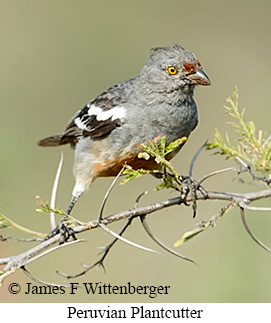
Late morning we'll drive to Chiclayo for lunch and then continue north for an hour to Bosque de Pomac Historic Sanctuary. Aside from the interesting ruins, the dry forest and scrub habitat at this site is excellent for a number of good birds. The primary target species are the endemic Peruvian Plantcutter, which can usually be found in dry scrub along the road, and Rufous Flycatcher. Of special interest is the very rare Tumbes Swallow, often seen flying above the Acacia forest in the reserve. Other interesting species here include Ecuadorian Piculet, Tumbes Chat-Tyrant, Short-tailed Field Tyrant, Snowy-throated Kingbird, and Tumbes Sparrow. Night at a hotel in Chiclayo.
DAY 5 - ABRA PORCULLA & JAEN
We'll depart early for the 2-hour drive up into the highlands, reaching the pass, Abra Porculla, by 7:30. We hope for clear weather but fog is always possible in the highlands. We'll be birding the "El Puente" area and a short trail off the main road at the pass in mainly cloud forest. The main target bird is the rather shy Piura Chat-Tyrant, found in shrub-filled gullies. We also hope to find the endemic White-winged Brushfinch. There is good birding at this site and other possibilities include Gray-chinned Hermit, Peruvian Sheartail, Golden-olive Woodpecker, Chapman's Antshrike, Rufous-necked Foliage-gleaner, Line-cheeked Spinetail, Gray-browed Brushfinch, White-headed Brushfinch, Bay-crowned Brushfinch, Golden Grosbeak, and Black-cowled Saltator.
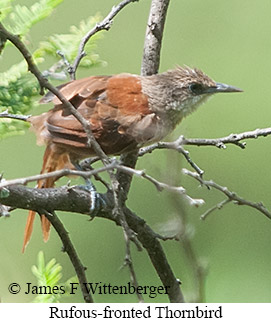
At mid-day we'll continue driving east to Jaen with a stop at a local restaurant for lunch en route. We'll arrive in late afternoon, in time to bird some arid foothills above the town. Birds there include Peruvian Pygmy-Owl, Marañon Crescentchest, Rufous-fronted Thornbird, Marañon Gnatcatcher, and Little Inca-Finch. Some early evening birding could yield Scrub Nightjar if not already seen at Chaparri. Night at hotel in Jaen.
DAY 6 - JAEN & ABRA PATRICIA
We'll depart early for some very xeric habitat outside Jaen. This area is the best place to find the rather scarce Little Inca-Finch. We'll also be looking for Marañon Antshrike, the uncommon Marañon Spinetail, Chinchipe Spinetail, and Marañon Sparrow. Also present are Scarlet-fronted Parakeet, a possible future split as Cordilleran Parakeet, Yellow-cheeked Becard, White-edged Oriole, Buff-bellied Tanager, and other more widely distributed species.
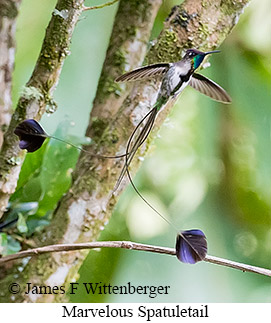
In late morning we'll depart for the Abra Patricia area. After a 3-hour drive plus a stop for lunch, we'll arrive at the Huembo Hummingbird Center. Our main target bird there is the spectacular Marvelous Spatuletail, which most recently has been visiting hummingbird feeders set up on a hillside across the road from the center entrance. Also typically present at those feeders are Sparkling Violetear, Chestnut-breasted Coronet, and Little Woodstar. After spending some time there, we'll continue on to the town of El Progreso, located near Abra Patricia.
One of our main target species in this area is the elusive and near mythical Long-whiskered Owlet. For many years this bird was rarely seen, but local knowledge has greatly improved our chances of seeing it. Most recently, the best place to see this species is a forested trail outside the nearby town of El Progeso, where a local guide will help us find it. The same site is also a good place to see Johnson's Tody-Flycatcher. Night at hotel in El Progreso.
DAY 7 - ABRA PATRICIA AREA
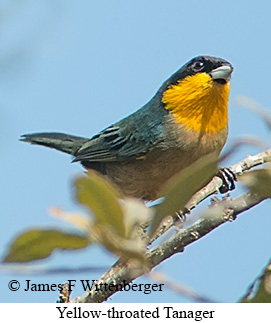
The habitat around Abra Patricia is pristine cloud forest and is home to numerous special birds. During the morning we'll bird roadsides in the area where we hope to find mixed species flocks comprised of species such as Common Chlorospingus, Rufous-crested Tanager, Oleaginous Hemispingus, Vermilion Tanager, a key target species, Lacrimose Mountain Tanager, Blue-winged Mountain Tanager, Yellow-throated Tanager, Beryl-spangled Tanager, and Metallic-green Tanager, the scarce Blue-browed Tanager, another target species Saffron-crowned Tanager, Flame-faced Tanager, Capped Conebill, Masked Flowerpiercer, and Gray-hooded Bush Tanager. A nearby site is the best place to see the range-restricted stunning Royal Sunangel.
After lunch in town, we'll transfer to nearby Owlet Lodge. During the afternoon we'll do some birding around the lodge and view hummingbirds attracted to lodge feeders such as Green-fronted Lancebill, Amethyst-throated Sunangel, Greenish Pufflet, Emerald-bellied Puffleg, Mountain Velvetbreast, Sword-billed Hummingbird, and Chestnut-breasted Coronet. Night at Owlet Lodge.
DAY 8 - ABRA PATRICIA AREA
We'll spend this day birding the extensive trails around our lodge. We have a reasonable chance of seeing the localized endemic Ochre-fronted Antpitta, which has some individuals coming out for food, and possibly also the endemic Rusty-tinged Antpitta, Chestnut Antpitta, and the recently split Rufous-breasted Antpitta. Other special birds we'll target include Rufous-vented Tapaculo, Cinnamon-breasted Tody-Tyrant, Johnson's Tody-Flycatcher, Golden-browed Chat-Tyrant, Peruvian Tyrannulet, Rufous-tailed Tyrant, Bar-winged Wood-Wren, Black-eared Hemispingus, and Yellow-scarfed Tanager. Other possibilities include Uniform Antshrike, Golden-headed Quetzal, Crested Quetzal, Streak-headed Antbird, Blackish Antbird, Spotted Barbtail, Ash-browed Spinetail, Rufous Spinetail, Golden-winged Manakin, Fiery-throated Fruiteater, Scaled Fruiteater, Ecuadorian Tyrannulet, Rufous-headed Pygmy-Tyrant, Black-throated Tody-Tyrant, Sharpe's Wren, Chestnut-capped Brushfinch, Three-striped Warbler, Red-hooded Tanager, among many others. Night at Owlet Lodge.
DAY 9 - ABRA PATRICIA & ARENA BLANCA
We'll spend the morning birding around Abra Patricia looking for any species missed the previous day. After lunch we'll depart for Arena Blanca Ecological Reserve. about a two hour drive. The main attraction awaits us the following morning, but we have the afternoon to view the hummingbird and fruit feeders. The hummingbird feeders attract Green-fronted Lancebill, Brown Violetear, Sparkling Violetear, Black-throated Mango, Wire-crested Thorntail, Violet-headed Hummingbird, Gray-breasted Sabrewing, Fork-tailed Woodnymph, Many-spotted Hummingbird, and Golden-tailed Sapphire while Blue-gray Tanager, Black-bellied Tanager, and possibly others come to the fruit feeder. There are also some trails through the forest at the reserve where a variety of birds can be found including Peruvian Warbling-Antbird, Zimmer's Antbird, Olivaceous Woodcreeper, Fiery-capped Manakin, Andean Cock-of-the-rock, and many others. Night at Arena Blanca.
DAY 10 - ARENA BLANCA & COCACHIMBA
Very early this morning we'll enter the blind at Arena Blanca and wait for some very secretive species to appear. We should have very good views of Cinereous Tinamou, Little Tinamou, and Rufous-breasted Wood-Quail while in the blind. Afterwards, we'll spend a little time around the gardens where we should see White-tipped Sicklebill and Great-billed Hermit feeding on the flowers.
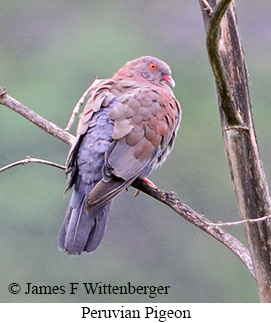
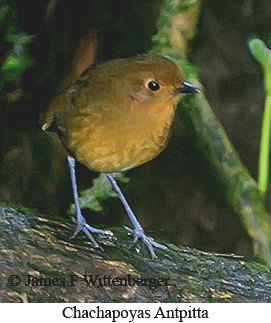
In late morning we'll retrace our route back westward to he turnoff onto the road heading south through the stunning scenery of the steep-walled Cocahuayco River canyon. It's about 4-5 hours to reach Cocachimba. We'll be making stops along the way in the canyon to look for the endemic Coppery Metaltail, Speckle-chested Piculet, Marañon Crescentchest, Chachapoyas Antpitta, and Neblina Tapaculo. We also have a good chance of seeing Pale-billed Antpitta and hope to see the very scarce endemic Peruvian Pigeon along the road. Other birds we could see include Rufous-capped Antshrike, White-chinned Thistletail, White-throated Tyrannulet, Peruvian Wren, Black-capped Hemispingus, Blue-backed Conebill, and Drab Hemispingus. Also, if Marvelous Spatuletail never showed around Huembo Center, we'll have another chance for it at feeders near Cocachimba. Night at a hotel in Cocachimba.
DAY 11 - LEYMEBAMBA
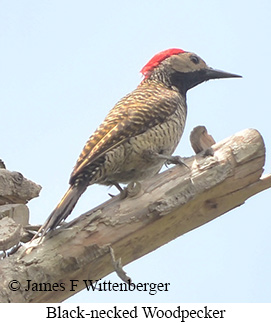
We'll depart after breakfast for the higher elevation town of Leymebamba. We'll be driving south through the Cochuayco River canyon where it joins up with the Utcubamba River and then onwards to the town. On the way we'll have another chance for the endemic Peruvian Pigeon and Marañon Crescentchest and hope to also see the endemic Black-necked Woodpecker and Marañon Thrush.
After arrival and lunch in Leymebamba, we'll bird the road above town. Our main target birds are Chachapoyas Antpitta, Russet-mantled Softtail, and Yellow-scarfed Tanager. Other possibilities include Rufous-breasted Chat-Tyrant, Rufous-browed Peppershrike, Grass Wren, Yellow-breasted Brushfinch, and Black-crested Warbler. As dusk approaches, we'll try for Blackish Nightjar and Koepcke's Screech-Owl. Night at a hotel in Leymebamba.
DAY 12 - BALSAS & CELENDIN
We'll depart Leymebamba after breakfast for the long drive to Celendin. We'll be driving first upward toward the Abra Barro Negro, a high altitude pass that reaches 3670 m (12040 ft), and then down the steep walls of the Marañon Canyon to the town of Balsas on the Marañon River. The town of Balsas is at an elevation of just 850 m (2800 ft), so we'll be descending over 9000 ft on this narrow, winding, mountain road. On our way up to the pass we'll be looking for birds such as Chachapoyas Antpitta, Neblina Tapaculo, Utcubamba Tapaculo, Russet-mantled Softtail, and Gray-browed Brushfinch while enjoying spectacular scenery. As we approach Balsas, but still up the road above town, we'll try for both Gray-winged Inca-Finch and Buff-bridled Inca-Finch. After crossing the Marañon River, we'll head up the steep slopes of the canyon on the other side. Not far up the canyon is a private orchard that is the best place to see the tiny, rare endemic Yellow-faced Parrotlet. The best way to see this species is to clamber down a quite steep path from the owner's house into the orchard below, where the parrotlets are usually feeding. From there we'll continue up the tortuous mountain switchbacks and eventually reach the town of Celendin two hours later. Night at a hotel in Celendin.
DAY 13 - CELENDIN & CAJAMARCA
After breakfast at the hotel, we'll drive out of town to look for the strangly disjunct local population of Rufous-fronted Thornbird and the near-endemic Fulvous-faced Scrub-Tyrant. We'll then depart for Cajamarca. En route we'll try Cajamarca Antpitta and also for Plain-tailed Warbling Finch and the more difficult Rufous-breasted Warbling Finch. Night at a hotel in Cajamarca.
DAY 14 - CAJAMARCA & LIMA
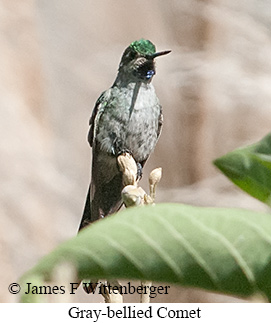
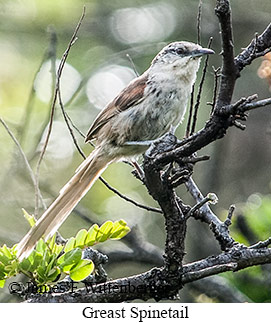
After breakfast, we'll drive up a back gravel road leading high above town into the foothills, where the scrub habitat is home for the endemic Rusty-crowned Tit-Spinetail. Purple flowering plants along the river is the best place to find the prized Gray-bellied Comet. We should also see Black Metaltail and Black-crested Tit-Tyrant in this same area. Much harder to see is the endemic Striated Earthcreeper, which rarely responds to playback or shows itself in the dense undergrown. After lunch we'll drive up a different gravel mountain road above town to look for Great Spinetail and Buff-bridled Inca-Finch. We'll then return to Cajamarca and drive to the airport for an early evening flight to Lima in time to connect with international flights home. End of tour at the Lima Airport.
DAY 15 - ARRIVAL HOME
Arrive home from overnight flight.
TOUR NOTES
Internal flights not included in tour price. This tour can be linked with our Cajamarca-El Molino extension.
ACCOMMODATIONS
During the tour we'll be staying at moderately priced comfortable hotels plus reasonably comfortable ecolodges at Chaparri, Abra Patricia, and Arena Blanca.
BIRDING LOCALES
FOR THIS TOUR