


WESTERN ANDES BIRDING TOUR
Tour Description

ECUADOR
BIRDING TOUR
ANY TIME*
| Duration: | 12 days, 11 nights |
| Group Size: | 2-4 |
| 2-3 Price: | $4350 |
| 4+ Price: | $4150 |
| Single Suppl: | $300 |
| Est #Species: | 300-325 |
| Pace: | Easy/Moderate |
| Difficulty: | Easy/Moderate |
| Best Time: | All but Mar-Apr |
| * This tour is available for any dates of your choosing provided guide services and accommodations are available. | |
DAY 1 - QUITO
International flights arrive by evening. Hotel provides transfer to accommodations. Overnight at San Jose de Puembo Hotel or similar.
DAY 2 - YANACOCHA RESERVE & BELLAVISTA
Early morning we'll depart for the high altitude Yanacocha Reserve, located on the western slope of the Pichincha Volcano about an hour and a half northwest of Quito. The reserve encompasses 964 hectares of elfin Polylepis Forest, home to many avian specialties but noted especially for its hummingbirds. A primary purpose of the reserve is to protect the highly endangered Black-breasted Puffleg, which was driven nearly extinct by land degradation while the area was owned by the Quito Water Authority. As far as is known, Yanacocha Reserve is the main breeding area of the species. The puffleg spends the breeding season from October-March in the inaccessible higher elevation elfin forest. It can be seen in accessible areas only from March-October.
Birding in the accessible areas entails a fairly long hike along the access road past the parking area and gate where visitors must leave their vehicles behind. A cleared area above the parking lot before the gate is a good place to find Scarlet-bellied Mountain Tanager. The road into the reserve is mostly level but is along a steep mountainside where there is limited habitat. Some birds can be seen along the road, which is lined mainly by bushes and stunted trees in the narrow area between the road and the slopes below. Likely possibilities include Tawny Antpitta (mostly heard in the valley below), Blackish Tapaculo, White-banded Tyrannulet, Crowned Chat-Tyrant, Streak-throated Bush-Tyrant, Rufous Wren, Hooded Mountain Tanager, Black-chested Mountain Tanager, Buff-breasted Mountain Tanager, Glossy Flowerpiercer, and Rufous-naped Brush-Finch. Several hummingbird feeders are in the reserve, and these attract the Black-breasted Puffleg as well as other hummingbirds such as Sapphire-vented Puffleg, Buff-winged Starfrontlet, Sword-billed Hummingbird, and Great Sapphirewing.
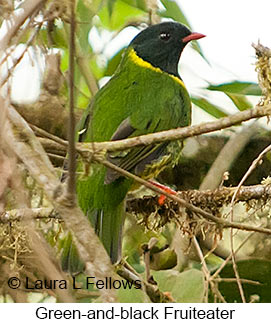
After spending the morning birding at Yanacocha, we'll continue on to Bellavista Cloud Forest Reserve and lodge. We'll have some time for viewing birds from the lodge balcony, which overlooks some good forest. While enjoying ourselves outside the bar area, we'll likely see Toucan Barbet, Green-and-black Fruiteater, and Plate-billed Mountain-Toucan. Several hummingbird feeders around the lodge attract species such as Gorgeted Sunangel, Speckled Hummingbird, Violet-tailed Sylph, Collared Inca, Buff-tailed Coronet, White-booted Racket-tail, and Fawn-breasted Brilliant. Overnight at Bellavista Lodge.
DAY 4 - BELLAVISTA RESERVE
Bellavista is located on a ridgeline so many of the trails in the reserve around the lodge are rather steep and difficult. However, a few trails traverse the ridgeline through secondary forest and are easier birding. We'll spend the morning birding these trails, where we should see Sickle-winged Guan, Crimson-mantled Woodpecker, Sierran Elaenia, Smoke-colored Pewee, Turquoise Jay, White-sided Flowerpiercer, and others. After lunch, we'll transfer to the Mindo Valley and do some birding there. If there are stakeouts for Banded Ground-Cuckoo or Rufous-crowned Antpitta, we'll take advantage of those. Overnight at Septimo Paraiso Lodge.
DAY 4 - REFUGIO PAZ & OILBIRD CAVE
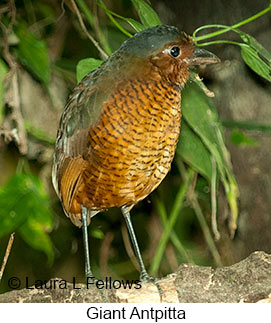
We'll depart extremely early for Refugio Paz, where the owner has conditioned several species of antpittas to come out on the trail for food. Following a 20-minute hike down a somewhat steep trail, we'll reach a blind where we can observe male Andean Cocks-of-the-Rock displaying in the understory. Later Angel Paz will treat us to close-up views of extremely rare and locally distributed antpittas he has conditioned to come out onto the trail. Currently five species usually appear. These are Giant Antpitta, Moustached Antpitta, Chestnut-crowned Antpitta, Yellow-breasted Antpitta, and Ochre-breasted Antpitta.
In addition to the antpittas, Angel can sometimes lure the rare and secretive Dark-backed Wood-Quail into the open as well. Many other middle elevation specialties are seen regularly during a visit to this private reserve, including Golden-headed Quetzal, Toucan Barbet, Ecuadorian Thrush, Flame-faced Tanager, and Black-capped Tanager. Angel also has several hummingbird feeders that attract hummingbirds such as Speckled Hummingbird, Violet-tailed Sylph, Brown Inca, Buff-tailed Coronet, Purple-bibbed Whitetip, Empress Brilliant, Purple-throated Woodstar, and more.
After lunch, we'll visit a deep, dark gully located near El Chontal, about an hour and a half from Mindo, to view roosting Oilbirds, a nocturnal species noteworthy for its use of echolocation similar to bats. Overnight at Septimo Paraiso Lodge.
DAY 5 - MASHPI AMAGUSA RESERVE
We'll depart very early so as to arrive at our first stop, the Mashpi Artisanal Chocolate Farm, where the owner has been feeding the Rufous-crowned Antpitta. We need to arrive by 6:30 or 7:00am to have a good chance at this bird, which can take some time to see as it roams around the forest and doesn't appear at a reliable time. We'll spend some time there birding forest trails. Birds often encountered include White-whiskered Puffbird, Cinnamon Woodpecker, White-flanked Antwren, Black-headed Antthrush, Black-hooded Antthrush, Purple-throated Fruitcrow, Dusky-faced Tanager, and Blue-whiskered Tanager. More rarely seen but possible are Berlepsch's Tinamou, Baudo Guan, Purple Quail-Dove, and Brown Wood-Rail. Around the owner's cacao plantation, likely birds include Little Cuckoo, Orange-fronted Barbet, and Maroon-tailed Parakeet.
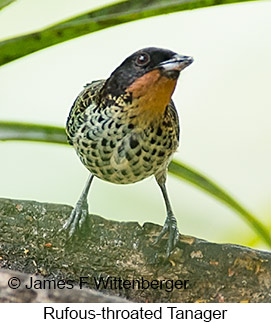
After enjoying some fantastic birding and magnificent chocolate, we'll continue on to the Mashpi Amagusa Reserve, located along the road to the very exclusive and very expensive Mashpi Lodge. Our main target bird here is the very localized Moss-backed Tanager, which is easily seen at the banana feeders in the reserve. Also coming to these feeders are Glistening-green Tanager and Rufous-throated Tanager. Hummingbird feeders attract a nice variety of species including White-whiskered Hermit, Green Thorntail, Violet-tailed Sylph, Purple-bibbed Whitetip, Empress Brilliant, and many others. The trail down to the river leads through nice forest and is home to many Choco endemics and more widely distributed species. Possibilities include Golden-olive Woodpecker, Rufous-rumped Antwren, Spotted Woodcreeper, Pacific Tuftedcheek, Pacific Tuftedcheek, Scaly-throated Foliage-gleaner, Golden-winged Manakin, Orange-breasted Fruiteater, Slaty-capped Flycatcher, Marble-faced Bristle-Tyrant, Pacific Flatbill, Choco Vireo, Black Solitaire , the very localized Rufous-brown Solitaire, Yellow-collared Chlorophonia, and Choco Warbler. Overnight at Septimo Paraiso Lodge.
DAY 6 - RANCHO SUAMOX & PLAYA DE ORO
We'll depart early for a transfer to Rancho Suamox Reserve, located near Pedro Vicente Maldonado. The reserve protects over 100 hectares of lowland forest and offers a new mix of species. This site is an excellent place to see the secretive Brown Wood-Rail, most easily seen from hides. It's one of the best places to see Blue-chested Hummingbird, which comes to feeders in the reserve. We'll also look for 4 other Choco endemics, namely Pallid Dove, White-whiskered Hermit, Purple-chested Hummingbird, and Orange-crowned Euphonia, before continuing on to Selva Verde. From There we'll take a motorized dugout up the Rio Cayapas to Playa de Oro Lodge, our base for the next 3 nights. Overnight at Playa de Oro Lodge.
DAYS 7-8 - PLAYA DE ORO & RESERVA DE LOS TIGRILLOS
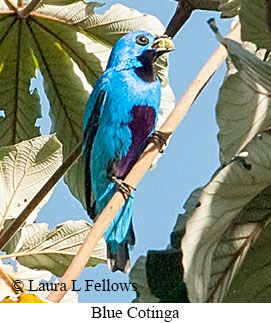
We have two full days to bird some of the last undisturbed Choco rainforest. A variety of trails near the lodge provide access to the forest. Our focus will be on this lower elevation rainforest, especially Choco specialties that are often hard to find elsewhere. Around the lodge we can expect to find Stub-tailed Antbird and Black-headed Antthrush. We may also be able to see the secretive Streak-chested Antpitta. A number of Colombian species reach their southern-most extent in this area. These include Purple-chested Hummingbird, Slate-throated Gnatcatcher, Scarlet-browed Tanager, Blue-whiskered Tanager, and Rufous-winged Tanager. We can also hope to see the scarce Spot-crowned Antvireo, eratically occurring Blue Cotinga, and the near-endemic Scarlet-breasted Dacnis.
We will spend some time trying to see the difficult Berlepsch's Tinamou, Baudo Guan, Tawny-faced Quail, and Olive-backed Quail-Dove. We hope to find the endangered Great Green Macaw and the thinly distributed Sapayoa, Dusky Leaftosser, Scaly-throated Leaftosser, Speckled Mourner, and Choco Sirystes. Many other lowland species occur as well, and we'll have two full days to see them. Overnights at Playa de Oro Lodge.
DAY 9 - HUMEDAL DE YALARE
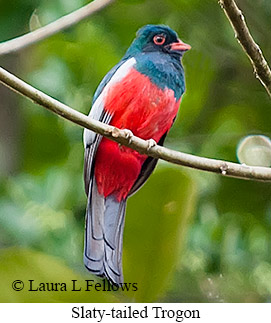
After some early birding around our lodge, we'll take the boat back to Selva Alegre and drive toward San Lorenzo where we'll stay this night. We'll spend the morning birding the swamp forest of Humedal de Yalare. Birds there include Rufous-headed Chachalaca, Slaty-tailed Trogon, Black-breasted Puffbird, Pied Puffbird, Five-colored Barbet, and Collared Aracari.
In the afternoon we'll bird the wet forests of the Andean foothills around Alta Tambo and Lita. Our main target species are the near-endemic Golden-chested Tanager and Yellow-green Tanager, both occurring only in very northern Ecuador and extreme southwestern Colombia. Other birds we can expect include Green Thorntail, Cinnamon Woodpecker, Lita Woodpecker, Russet Antshrike, Yellow-collared Chlorophonia, Rufous-throated Tanager, and Blue-whiskered Tanager. With some effort we may also see Choco Tapaculo. In more open areas we could find White-lined Tanager and Thick-billed Seed-Finch. Overnight at a hotel in San Lorenzo.
DAY 10 - CHICAL ROAD
We'll devote most of this day birding the road between San Lorenzo and Chical. The road leads up to a mountain pass at an elevation fo 2350m (7710ft) and then drops down to the town of Chical at an elevation of around 1320m (4300ft).Our main target birds this day are Hoary Puffleg, Fulvous-dotted Treerunner, Purplish-mantled Tanager, and Indigo Flowerpiercer. This area remains extensively forested and efforts are being made to preserve much of it. We should also see a good variety of other Choco specialties such as Brown Inca, Velvet-purple Coronet, Rufous-gaped Hillstar, Empress Brilliant, Cloud-forest Pygmy-Owl, Yellow-breasted Antpitta, Choco Tyrannulet, Beautiful Jay, Dusky Chlorospingus, Choco Brushfinch, Moss-backed Tanager, and Glistening-green Tanager. Many other more widely distributed species are also present in this area. Overnight at a hotel in Ambuqui.
DAY 11 - CHOTA VALLEY & PULULAHUA
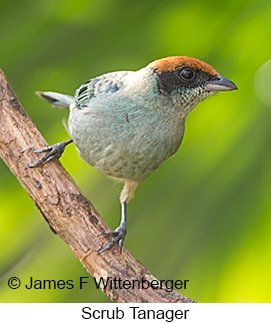
We'll spend the morning birding gardens and hedgerows in the Chota Valley, looking especially for the range-restricted Blue-headed Sapphire and the mainly Colombian Scrub Tanager whose range extends only into very northern Ecuador. Other birds we could see include White-tipped Swift, Western Emerald, Pearl Kite, Ash-breasted Sierra Finch, and other widely distributed species.
From there we'll drive south to the Pululahua Volcano area north of Quito. En route we'll stop at a wetland to look for the near-endemic Ecuadorian Rail and also the locally distributed Subtropical Doradito. We'll also see a variety of ducks and other wetland species there. After arrival in Pululahua we'll do some night birding to look for the rare Buff-fronted Owl and the more widely distributed Stygian Owl. Overnight at a hotel in Pululahua.
DAY 12 - PULULAHUA & AIRPORT TRANSFER
Early this morning we'll look for Rusty-breasted Antpitta and Rufous-chested Tanager before transferring to the international airport in Quito. Tour ends at the airport.