


MANU ROAD TOUR
Tour Description

PERU
BIRDING TOUR
ANY TIME*
| Duration: | 9 days, 8 nights |
| Group Size: | 2-4 |
| 2-3 Persons Price: | $3700 |
| 4 Persons Price: | $3500 |
| Single Suppl: | $300 |
| Est #Species: | 350-400 |
| Pace: | Easy |
| Difficulty: | Easy |
| Best Time:: | May-Nov |
| * This tour is available for any dates of your choosing provided guide services and accommodations are available. | |
DAY 1 - CUSCO
Arrive at Cusco airport and transfer to your nearby hotel. Overnight at a hotel in Cusco.
DAY 2 - HUACARPAY LAGOON amp; UPPER MANU ROAD
We'll depart early for Huacarpay Lagoon, located about 30km southeast of Cusco. The lagoon is at high elevation and surrounded by arid montane grassland and scrub. Possibilities on the water include Andean Goose, Yellow-billed Pintail, Puna Teal, Yellow-billed Teal, White-tufted Grebe, and Andean Coot. Marshy shores are home to Plumbeous Rail, Wren-like Rushbird, Andean Negrito, Yellow-winged Blackbird and the striking Many-colored Rush Tyrant. A waterhole near Huacarpay Lagoon used by sheepherders usually attracts a nice variety of birds including White-browed Chat-Tyrant, Blue-and-yellow Tanager, Plumbeous Sierra-Finch, and Band-tailed Seedeater. Scrub habitat along the road around Huacarpay Lagoon is good for Rusty-fronted Canastero, Streak-fronted Thornbird, White-crested Elaenia, Chiguanco Thrush, Peruvian Sierra-Finch, Mourning Sierra-Finch, and White-winged Duica-Finch. It's also possible to find the spectacular Bearded Mountaineer, which feeds on the tubular yellow flowers of the wild Tree Tobacco growing in the outwash plains nearby. Flocks of Puna Ibis are usually present near the lakes or feeding in wet grassland along the upper Manu Road.
After several hours birding around Huacarpay Lagoon, we'll continue driving above treeline to Wayqecha Biological Station, located at about 10,000 ft in a scrub and alpine woodland zone of the high Andes. Along the road we'll look for Chestnut-breasted Mountain-Finch in the inter-montane valleys used by Qechuan peasant farmers to graze their animals. We'll also look for Great Sapphirewing, Undulated Antpitta, Puna Thistletail, Creamy-crested Spinetail, and Grass Wren near the last Andean pass (Acjanaco), where we may also find Andean Condor soaring overhead if the skies are clear. A short side trip en route may produce Line-fronted Canastero and Scribble-fronted Canastero. If time permits we'll try for Puna Tapaculo and Diademed Tapaculo in the same area.
Upon arrival we should have time to bird along the upper Manu Road and possibly a short trail into woodland above the lodge. In the forested ravine and and among stunted trees along the road we sometimes see Gray-breasted Mountain-Toucan and mixed tanager flocks that could feature Hooded Mountain-Tanager, Scarlet-bellied Mountain-Tanager, Buff-breasted Mountain-Tanager, and Grass-green Tanager. Other possibilities along the road include Peruvian Piedtail, Rufous-capped Thornbill, Streak-throated Bush-Tyrant, d'Orbigny's Chat-Tyrant, Collared Jay, Blue-capped Tanager, Moustached Flowerpiercer, Deep-blue Flowerpiercer, and Black-faced Brushfinch. After dark we'll try for Swallow-tailed Nightjar near the lodge. Overnight at Wayqecha Biological Station.
DAY 3 - WAYQECHA BIOLOGICAL STATION
We have a full day birding around our lodge. Most of our time will be spent birding the road, but there are a few steep trails around the lodge that we may visit. We'll try for Trilling Tapaculo and Red-and-white Antpitta, which should be calling. Other possibilities include the nomadic Golden-plumed Parakeet as well as Gray-breasted Mountain-Toucan, Scaly-naped Parrot, Puna Thistletail, White-winged Black-Tyrant, Streak-throated Bush-Tyrant, Rufous-bellied Bush-Tyrant, Barred Fruiteater, Red-crested Cotinga, White-browed Conebill, and Plushcap.We may also return back up the road to Acjanco Pass if we missed our targets there the previous day.
The lodge now has hummingbird feeders that typically attract Lesser Violetear, Sparkling Violetear, Amethyst-throated Sunangel, Long-tailed Sylph, Shining Sunbeam, and Sword-billed Hummingbird. Overnight at Wayqecha Biological Station.
DAY 4 - PILLAHUATA & MANU ROAD
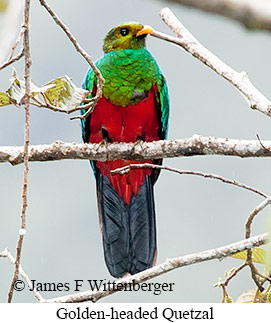
After early breakfast we'll head downslope along Manu Road, birding en route. We'll concentrate on mixed species flocks encountered along the way plus other interesting birds we may spot. The road passes through pristine forest as it descends through the Pillahuata area and eventually to the middle elevation forest around San Pedro. Among the many possibilities we may see are Black-and-chestnut Eagle, Barred Forest-Falcon, Bar-bellied Woodpecker, Marcapata Spinetail, Plumbeous-crowned Tyrannulet, Bolivian Tyrannulet, Band-tailed Fruiteater, Three-striped Hemispingus, Orange-throated Tanager, Yellow-throated Tanager, Black-capped Tanager, Cuzco Brushfinch, and Short-billed Chlorospingus. Sometimes seen along this stretch of road is the rare Greater Scythebill and the elusive Yungas Manakin. Sometimes a raucous flock of White-browed Jays makes an appearance. Crested Quetzal and Golden-headed Quetzal are possible as well. It seems every visit produces a surprising rarity. We'll arrive at the lodge late in the afternoon. Shorty after we arrive, we'll visit an active Andean Cock-of-the-Rock lek located a short walk from the lodge. Overnight at Cock-of-the-Rock Lodge.
DAYS 5 - SAN PEDRO AREA
Cock-of-the-Rock Lodge is one of the original lodges along Manu Road. It's located on the San Pedro River and includes a private forested reserve with an extensive network of trails. We'll devote all day to birding the area. The forest trails are the best place to see Yungas Manakin. The secretive Brown Tinamou is possible as well. We'll devote plenty of time to roadside birding through middle-elevation forest near the lodge, where we may find Bluish-fronted Jacamar, Crested Quetzal, Golden-headed Quetzal, Stripe-chested Antwren, Yellow-breasted Antwren, Slaty Gnateater, Cinnamon-faced Tyrannulet, Chestnut-breasted Wren, Black-eared Hemispingus, Plushcap, Rust-and-yellow Tanager, Orange-eared Tanager, Blue-necked Tanager, Paradise Tanager, Golden-eared Tanager, Deep-blue Flowerpiercer, Black-faced Brushfinch, and many others. This section of the road is exceptionally birdy and we'll take full advantage.
A nice variety of hummingbirds come to the feeders near the lodge. Some 13 species are possible including Green-fronted Lancebill, Blue-fronted Lancebill, Wire-crested Thorntail, Long-tailed Sylph, Booted Raquet-tail, Violet-fronted Brilliant, and Many-spotted Hummingbird.
During early evening we'll do some optional night birding in hopes of seeing Rufescent Screech-Owl, Rufous-banded Owl, Lyre-tailed Nightsjar, and Andean Potoo. Nights at Cock-of-the-Rock Lodge.
DAY 6 - LOWER MANU ROAD
We'll depart early after a pre-dawn breakfast to continue downslope to lower elevations, eventually as far as Manu Biological Station. Much of this section of the road has been cleared to raise cash crops, but there is a stretch of forest still present between 1380-760m (4500-2500 ft), and we'll concentrate our efforts on birding this stretch of the road. This forest is in the upper tropical zone, quite different from the middle elevation forest at San Pedro, so it has a new set of birds for us to find. Specialties here include Peruvian Piedtail, Versicolored Barbet, Blue-chinned Barbet, Blue-moustached Barbet, Chestnut-backed Antshrike, Stripe-chested Antwren, Black-backed Tody-Flycatcher, Northern Chestnut-breasted Wren, and Southern Chestnut-breasted Wren. There is an astonishing record of the mainly Bolivian Inti Tanager in this area, but chances of seeing it are quite slim. After arrival at the lodge, we'll have some time to relax and do some afternoon birding. Overnight at Manu Biological Station.
DAYS 7-8 - MANU (FORMERLY VILLA CARMEN) BIOLOGICAL STATION
Manu Biological Station is a lodge and research station owned by the Amazonian Conservation Assocation. It protects a transitional zone of low Andean foothlls and tropical upper Amazonian lowlands. The number one birding attraction here is the diversity of antbirds found at this elevation. We'll spend considerable effort looking for Fasciated Antshrike, Great Antshrike, Plain-winged Antshrike, Bluish-slate Antshrike, Pygmy Antwren, Amazonian Streaked-Antwren, Gray Antwren, Gray Antbird, Manu Antbird, White-browed Antbird, Band-tailed Antbird, Silvered Antbird, Chestnut-tailed Antbird, Black-throated Antbird, Spot-backed Antbird, Black-spotted Bare-eye, Amazonian Antpitta, Thrush-like Antpitta, and Black-faced Antthrush. While feasting on this diversity, we'll be seeing many other birds including the range-restricted Fine-barred Piculet, Fiery-capped Manakin, Johannes's Tody-Tyrant, and maybe even the near-endemic Scarlet-hooded Barbet.
The above is just a small sample of what is possible. Flowers and feeders around the lodge attract White-necked Jacobin, the scarce endemic Koepcke's Hermit, the range-restricted Rufous-crested Coquette, the very localized Gould's Jewelfront, Amethyst Woodstar, Blue-tailed Emerald, Violet-headed Hummingbird, the always aggressive Gray-breasted Sabrewing, Fork-tailed Woodnymph, the lovely Golden-tailed Sapphire, and Sapphire-spangled Emerald.
Primary forest is home to Plain Antvireo, Gray-throated Leaftosser, and Ringed Antpipit in the understory and Olivaceous Woodcreeper, Ocellated Woodcreeper, Tschudi's Woodcreeper, Speckled Spinetail, Spectacled Bristle-Tyrant, and a variety of other birds. Exemplary of the species diversity are the 20 species of parrots, nearly 60 species of flycatchers, and some 40 species of tanagers that occur in this reserve. Birding at dusk and before dawn is also worthwhile, with several species of nighjars and owls possible. Nights at Manu Biolodge.
DAY 9 - TRANSFER & CUSCO
It's about a 5-hour drive to Cusco. Depending on flight connections, we may have some time for morning birding or, more likely, will need to depart after early breakfast. The tour ends at the airport or your hotel in Cusco.
TOUR NOTES
Can be combined with any of our other southeast Peru tours based out of Cusco and also our Manu Lowlands tour..
ADDITIONAL INFO
(Not on Menu Above)
BIRDING LOCALES