


MANU LOWLANDS TOUR
Tour Description

PERU
BIRDING TOUR
ANY TIME*
| Duration: | 9 days, 8 nights |
| Group Size: | 2-4 |
| 2-3 Persons Price: | $4175 |
| 4 Persons Price: | $3950 |
| Single Suppl: | $500 |
| Est #Species: | 425-500 |
| Pace: | Easy |
| Difficulty: | Easy |
| Best Time:: | May-Nov |
| * This tour is available for any dates of your choosing provided guide services and accommodations are available. | |
DAY 1 - ATALAYA MANU & AMAZONIA LODGE
The tour begins in the afternoon at the port town of Atalaya Manu, located on the Alto Rio Madre de Dios. It's best combined with our tour of Manu Road. If not, then a transfer from Cusco of about 6 hours is required to meet the boat.
Our first destination is the Amazonas Lodge, which is situated in a transitional zone at an elevation of about 500m (1640 ft) where the foothills begin to flatten out into the lowland Amazon basin. The habitat around the lodge is mostly transitional forest and lowland flood plain, but the lodge grounds are more open and contain flowering bushes that attract a variety of hummingbirds.
The boat ride to the lodge takes about 20 minutes. Once we arrive, we'll check in and begin birding the lodge grounds. Most likely we'll spend this time in the gardens looking for the various hummingbirds occurring there. We're especially seeking Rufous-breasted Hermit, Koepcke's Hermit, Reddish Hermit, Black-eared Fairy, and Festive Coquette. Other hummingbirds regularly present in the gardens include Pale-tailed Barbthroat, Needle-billed Hermit, Black-eared Fairy, Wire-crested Thorntail, Rufous-crested Coquette, Gould's Jewelfront, Blue-tailed Emerald, Gray-breasted Sabrewing, Fork-tailed Woodnymph, Golden-tailed Sapphire, Sapphire-spangled Emerald, and White-chinned Sapphire.
In late afternoon it's worthwhile to ascend the canopy tower to look for canopy birds. There we could well see macaws and parrots foraging in the trees and hopefully mixed species flocks that feature a variety of tanagers among other birds. Overnight at Amazonia Lodge.
DAY 2 - AMAZONIA LODGE
Early this morning we'll take advantage of the several trails that lead along a river and through bamboo thickets and the extensive lowland forest around the lodge. Over 600 species of birds have been recorded on the lodge grounds, so we will be kept busy. Such high species diversity is a reflection of the many micro-habitats present within the rainforest around the lodge.
Endemic and near-endemic birds we especially hope to see include Black Tinamou, Blue-moustached Barbet, Fine-barred Piculet, Rufescent Antshrike, Slaty Gnateater, the secretive and difficult to see Elusive Antpitta, Rufous-fronted Antthrush, Yungas Manakin, Cerulean-capped Manakin, Cinnamon-faced Tyrannulet, Black-backed Tody-Flycatcher, Pale-eyed Blackbird, and Cuzco Warbler. The lodge grounds is one of the best places to see range-restricted species such as Scarlet-hooded Barbet, Bamboo Antshrike, the always difficult to find Peruvian Recurvebill, and the locally distributed Long-crested Pygmy-Tyrant.
We'll spend the entire day birding and will see plenty of additional species as well. Flocks of Chestnut-fronted Macaw, Military Macaw, Scarlet Macaw, and perhaps the rare Blue-headed Macaw are regularly seen overhead. Other parrots around the property include White-eyed Parakeet, Dusky-headed Parrot, and Blue-headed Parrot. An oxbow lake cut off from the river is home to bizarrely primitive Hoatzin's that may demonstrate their impressive displays. Extensive stands of bamboo within the forest are home to Bamboo Antshrike. Many species of othr antbirds are present, often in mixed species flocks following army ant swarms. The typical flock leader is Bluish-slate Antshrike, which is quite common. Species likely to be seen include Great Antshrike, Chestnut-backed Antshrike, Plain-winged Antshrike, White-shouldered Antshrike, White-eyed Antwren, Gray Antwren, Blackish Antbird, Black Antbird, White-browed Antbird, Silvered Antbird, Chestnut-tailed Antbird, Goeldi's Antbird, and quite possibly the strikingly colored Black-spotted Bare-eye. Along forest trails typical species include Blue-crowned Trogon, Amazonian Motmot, Black-fronted Nunbird, Bluish-fronted Jacamar, Gilded Barbet, Lemon-throated Barbet, Plain Softtail, Chestnut-crowned Foliage-gleaner, Plain Tyrannulet, Pink-throated Becard, Fiery-capped Manakin, Golden-bellied Warbler, Turquoise Tanager, and Black-faced Dacnis. Rarities such as Black-capped Tinamou (heard much more often than seen), Buckley's Forest-Falcon, Red-billed Scythebill, Amazonian Antpitta, and Johannes's Tody-Tyrant are always possible. With special effort one can ferret out Rusty-belted Tapaculo, a secretive bird often seen if everyone is very quiet.
In the evening we'll spend some time looking for nocturnal species that we've seen before at this lodge. These include Great Potoo, Long-tailed Potoo, Common Potoo, Tawny-bellied Screech-Owl, Mottled Owl, Black-banded Owl. Overnight at Amazonia Lodge.
DAY 3 - AMAZONIA LODGE & PANTIACOLLA LODGE
We'll spend the morning birding around Amazonia Lodge, looking for species missed the previous day. Mid-morning after breakfast we'll depart by motorized boat down the Alto Rio Madre de Dios to Pantiacolla Lodge, a less well known lodge situated about 2 hours downstream from Amazonia Lodge. The journey makes a person feel like they've reached a truly remote place despite the occasional homestead along the river. During the boat transfer typical riverside species such as Horned Screamer, Pied Lapwing, Collared Plover, Large-billed Tern, and Swallow-winged Puffbird are normally seen. It's a good time to look for raptors such as Black-and-white Hawk-Eagle as well as Sand-colored Nighthawk roosting on sandbars. The boat should arrive by early afternoon, allowing time for some birding before dark. Overnight at Pantiacolla Lodge.
DAY 4 - PANTIACOLLA LODGE
Pantiacolla is considered by those in the know to be the best birding lodge in the Peruvian Amazon, partly because it's extensive bamboo stands are the best place to see bamboo specialists and partly because bird activity usually remains high all day, unlike other sites in the Amazon. Excellent birding habitat including extensive bamboo, varzea and terra firme forest, river islands, and river edge are within an easy 5-minute walk from the lodge. An extensive trail system provides access to those habitats and also low-lying cloud forest on a higher ridgeline where the rare Black-capped Tinamou is found. Nearly 600 bird species as well as 8 monkey species including the rare Monk Saki Monkey have been recorded on the 900ha lodge grounds.
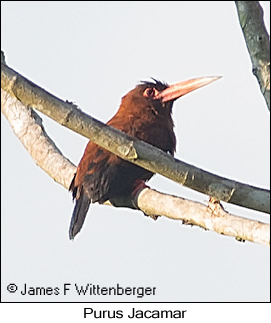
We'll spend a full day birding this site, which offers numerous opportunities to find less common species such as Bartlett's Tinamou, Razor-billed Curassow, Pale-winged Trumpeter, Pavonine Quetzal, Collared Puffbird, Striolated Puffbird, Gray-cheeked Nunlet, Purus Jacamar, Cream-colored Woodpecker, Ruddy Spinetail, Eastern Woodhaunter, Tschudi's Woodcreeper, Sclater's Antwren, Banded Antbird, White-throated Antbird, Elusive Antpitta, Ash-throated Gnateater, Ochre-bellied Flycatcher, White-bellied Tody-Tyrant, Amazonian Royal-Flycatcher, Musician Wren, Yellow-shouldered Grosbeak, and Pale-eyed Blackbird. Notable bamboo specialists include Rufous-headed Woodpecker, Peruvian Recurvebill, Dusky-cheeked Foliage-gleaner, Brown-rumped Foliage-gleaner, Ornate Antwren, Striated Antbird, Manu Antbird, White-lined Antbird, Flammulated Pygmy-Tyrant, White-cheeked Tody-Flycatcher, Large-headed Flatbill, and Dusky-tailed Flatbill. Mixed species tanager flocks feeding in trees around the lodge itself are a special attraction, better than anywhere else in the Peruvian Amazon headwaters. Overnight at Pantiacolla Lodge.
DAY 5 - PANTIACOLLA & MANU WILDLIFE CENTER
This morning we'll depart after breakfast for the transfer by boat from Pantiacolla Lodge to Manu Wildlife Center. The transfer takes about 6 hours. We'll see pretty much the same birds we saw on the previous transfer, but viewing them all again will keep us occupied. The lodge is situated within the Manu Biosphere Reserve. An extensive trail system of over 20km provides access to a variety of forest habitats. A 35m (120ft) tower provides excellent viewing of the forest canopy. The only large macaw and parrot clay lick in the region is a short boat ride away. Nearly 600 species of birds have been recorded around the lodge.
A word should be said here about nearby Tambo Blanquillo Lodge. Tambo Blanquillo is located very near the better known Manu Wildlife Center but actually owns the property where the oxbow lakes, parrot clay lick, and observation tower are located. Visitors to MWC must pay $200 each to access these sites, while guests of Tambo Blanquillo pay no extra fee for this access. Birding is otherwise similar at both sites. The main difference is that the accommodations are considered more comfortable at Manu Wildlife Center. Even so, those at Tambo Blanquillo Lodge are perfectly fine. While we have Manu Wildlife Center on our itinerary, Tambo Blanquillo can be substituted for it upon request.
DAYS 6-7 - MANU WILDLIFE CENTER
We have two full days to bird at this magical place deep in the headwaters of the Peruvian Amazon. An additional day here would be very worthwhile and can be added to our itinerary at additional cost. One full morning will be spent at the parrot/macaw clay lick where the birds come in every day for needed minerals found in the clay. Visitors sit in a blind just 50m away so photo opportunities are fabulous. Species usually present are Red-and-green Macaws, possibly Scarlet Macaws, Orange-cheeked Parrot, Blue-headed Parrot, Yellow-crowned Parrot, and Mealy Parrot. At the oxbow lakes we'll look for Blue-throated Piping-Guan, Agami Heron, Rufous-sided Crake, Gray-breasted Crake, Sungrebe, Hoatzin, Amazonian Streaked-Antwren, Band-tailed Antbird, Silvered Antbird, and Large-billed Seed-Finch. The observation tower on top of a huge Kapok tree affords an opportunity to see otherwise difficult-to-spot canopy birds. Activity varies every day so it's often worth climbing the tower more than once when time permits. Possibilities include Lineated Foliage-gleaner, Chestnut-winged Foliage-gleaner, Sclater's Antwren, Three-striped Flycatcher, Band-tailed Manakin, Red-billed Pied Tanager, Flame-crested Tanager, Turquoise Tanager, Paradise Tanager, Green-and-gold Tanager, Yellow-bellied Tanager, Opal-rumped Tanager, Opal-crowned Tanager, Blue Dacnis, and Yellow-shouldered Grosbeak. The remainder of the time we'll bird various trails and waterways through varzea and terra firme forest on lodge property. Nights at Manu Wildlife Center.
DAY 8 - TRANSFER TO PUERTO MALDONADO
After early breakfast we'll depart by boat heading downriver to Boca Colorado and thence to the frontier town of Puerto Maldonado. Once again we'll be looking at birds during the boat transfer. This part of the river is where Orinoco Goose is most likely to be seen, as it usually avoids disturbed areas and is easier to find along this stretch of the Madre de Dios River. After disembarking, we'll transfer by bus to Puerto Maldonado. We'll arrive in time for lunch in town and our afternoon flight back to Cusco or Lima. Birding outside town can be productive, so an extra day can be added to the tour for that purpose at additional cost.
TOUR NOTES
Best combined with our Peru Manu Road tour. The number of days at each lodge can be increased upon request at additional cost.
ADDITIONAL INFO
(Not on Menu Above)
BIRDING LOCALES