(Phone/WhatsApp): 206-650-3425
info@exoticbirding.com

AMAZON LOWLANDS/IQUITOS TOUR

Duration:15 days, 14 nights
Group Size:2-4
2-3 Price:$6400
4+ Price:$6100
Single Suppl:$700
Est #Species:375-425
Pace:Easy
Difficulty:Moderate/Difficult
Best Time:Jun-Oct
* This tour is available for any dates of your choosing provided guide services and accommodations are available.

Internal flights are not included in the tour price.
button Tour Overview

In northern Peru the clear waters of the Marañon River carves a deep canyon and flows through it into the lowlands of northeastern Peru. There it joins the muddy brown waters of the Ucayali River that originates in southern Peru and flows north into the lowlands. This confluence is the geographical beginning of the mighty Amazon River and is home to many amazonian birds found nowhere else in the world. Our tour of the Peruvian Amazon visits all 4 birding locales just downstream from where these two rivers come together near the lowland city of Iquitos.

Our tour begins with an early morning flight from Lima to Iquitos in the Peruvian Amazon followed by a 3-hour boat transfer to the ACT Canopy Walkway Lodge located on the Sucusari River, a tributary of the Napo River in the Peruvian Amazon. After 3 full days birding there, we transfer to the nearby Explornapo Lodge where we'll stay for the next 2 days. We then return to Iquitos for 3 nights to accommodate 2 full days of birding in the nearby Allpahuayo-Mishana Reserve and along the Iquitos-Nauta Road. We then drive 2-hours south from Iquitos and take an hour-long boat ride up the Amazon River to Muyuna Amazon Lodge, where we'll devote 4 full days of birding there. The tour ends with a boat transfer back to Iquitos followed by an evening flight to Lima.

button Tour Itinerary

Day 1 - Meals: None; Accommodation: Hotel near airport; Activity: Arrive in Lima.
Day 2 - Meals: BLD; Accommodation: ACTS Canopy Walkway Lodge; Activity: Early flight from Lima to Iquitos. Boat transfer to the Sucusari River and ACTS lodge. Afternoon birding.
Day 3 - Meals: BLD; Accommodation: ACTS Canopy Walkway Lodge; Activity: Birding terra firme forest around lodge.
Day 4 - Meals: BLD; Accommodation: ACTS Canopy Walkway Lodge; Activity: Birding terra firme forest around lodge.
Day 5 - Meals: BLD; Accommodation: ACTS Canopy Walkway Lodge; Activity: Birding terra firme forest around lodge.
Day 6 - Meals: BLD; Accommodation: Explornapo Lodge; Activity: Boat transfer to Explornapo Lodge. Birding varzea forest and river islands there.
Day 7 - Meals: BLD; Accommodation: Explornapo Lodge; Activity: Boat transfer to Explornapo Lodge. Birding varzea forest and river islands there.
Day 8 - Meals: BLD; Accommodation: Hotel in Iquitos; Activity: Morning birding at Explornapo Lodge. After lunch transfer to Iquitos. Afternoon birding Malecon Marshes.
Day 9 - Meals: BLD; Accommodation: Hotel in Iquitos; Activity: Birding Allpahuayo-Mishana Reserve.
Day 10 - Meals: BLD; Accommodation: Hotel in Iquitos; Activity: Birding Allpahuayo-Mishana Reserve.
Day 11 - Meals: BLD; Accommodation: Muyuna Amazon Lodge; Activity: Morning transfer to Muyuna Amazon Lodge. Rest of day birding there.
Day 12 - Meals: BLD; Accommodation: Muyuna Amazon Lodge; Activity: All day birding around Muyuna Amazon Lodge.
Day 13 - Meals: BLD; Accommodation: Muyuna Amazon Lodge; Activity: All day birding around Muyuna Amazon Lodge.
Day 14 - Meals: BLD; Accommodation: Muyuna Amazon Lodge; Activity: All day birding around Muyuna Amazon Lodge.
Day 15 - Meals: BL; Accommodation: None; Activity: Morning birding around Muyuna Amazon Lodge. Afternoon transfer to Iquitos. Evening flight to Lima. End of tour in Lima.

button Accommodations

The ACTS Canopy Walkway Lodge and Explornapo Lodges are comfortable but rustic. Both lodges only have pit toilets and shared showers, all clean but not in the rooms. Both lodges have very good meals. The Muyuna Amazon lodge is nicer with private bathrooms though still somewhat rustic. Hotels in Iquitos are comfortable and similar to moderately priced hotels in other Peruvian cities.

In Iquitos the accommodations are moderately priced, comfortable hotels.

button Included Locales
button Tour Map
button Tour Considerations
:

PACE - Easy

DIFFICULTY - Birding in the Peruvian Amazon around Iquitos can be very rewarding but also difficult. Some birding is by boat, some on trails through terra firme forest. Trails in the forest are mostly level. The difficulty comes from seeing birds that are often in dense thickets or high in the canopy and occur at low densities.

DOMESTIC FLIGHTS - Direct flights are available from Lima to Iquitos with numerous departure times from very early in the morning to a bit later. The return flight currently departs around 10:15pm so the schedule on the final day could be adjusted to take the mid-afternoon flight instead.

CLIMATE - The climate around Iquitos is tropical - oppressively hot and humid year-round. Rainy season is December-May, resulting in higher water in flooded forests that allows taking a boat farther into the interior of these forests. The greater rains leads to more mosquitos. Dry season is June-November. During these months, rainfall is somewhat less but sudden showers sill occur. The days are hotter than during wet season.

BIRD ACTIVITY - During rainy season birds are active all day. Breeding occurs at this time of year, so birds are vocalizing more and endemics are easier to see. During dry season birds are most active early in the morning and become inactive by mid-morning. Activity picks up again in late afternoons.

PHOTOGRAPHY - Photography can be challenging in the rainforest.

button Tour Photos
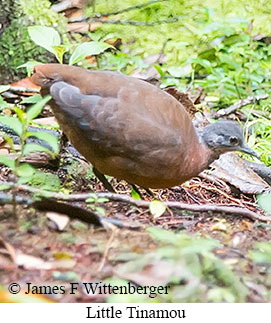
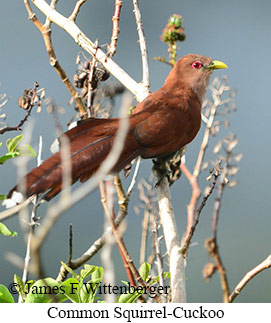
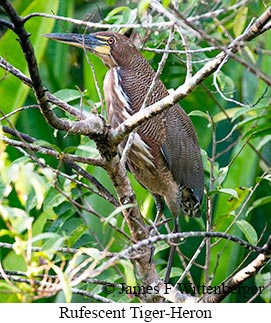
White-throated Tinamou - © James F Wittenberger and Exotic Birding LLC Cinereous Tinamou - © James F Wittenberger and Exotic Birding LLC Little Tinamou - © James F Wittenberger and Exotic Birding LLC Horned Screamer - © James F Wittenberger and Exotic Birding LLC Horned Screamer - © James F Wittenberger and Exotic Birding LLC Horned Screamer - © James F Wittenberger and Exotic Birding LLC Blue-throated Piping-Guan - © James F Wittenberger and Exotic Birding LLC Blue-throated Piping-Guan - © James F Wittenberger and Exotic Birding LLC Speckled Chachalaca - © James F Wittenberger and Exotic Birding LLC Plumbeous Pigeon - © James F Wittenberger and Exotic Birding LLC Common Squirrel-Cuckoo - © James F Wittenberger and Exotic Birding LLC Great Potoo - © James F Wittenberger and Exotic Birding LLC Common Potoo - © James F Wittenberger and Exotic Birding LLC White-necked Jacobin - © James F Wittenberger and Exotic Birding LLC White-necked Jacobin - © James F Wittenberger and Exotic Birding LLC Gould's Jewelfront - © James F Wittenberger and Exotic Birding LLC Gould's Jewelfront - © James F Wittenberger and Exotic Birding LLC Gray-breasted Sabrewing - © James F Wittenberger and Exotic Birding LLC Fork-tailed Woodnymph - © James F Wittenberger and Exotic Birding LLC Golden-tailed Sapphire - © James F Wittenberger and Exotic Birding LLC Golden-tailed Sapphire - © James F Wittenberger and Exotic Birding LLC Golden-tailed Sapphire - © James F Wittenberger and Exotic Birding LLC Gray-necked Wood Rail - © James F Wittenberger and Exotic Birding LLC Rufous-sided Crake - © James F Wittenberger and Exotic Birding LLC Sungrebe - © James F Wittenberger and Exotic Birding LLC Limpkin - © James F Wittenberger and Exotic Birding LLC Wattled Jacana - © James F Wittenberger and Exotic Birding LLC Wattled Jacana - © James F Wittenberger and Exotic Birding LLC Black Skimmer - © James F Wittenberger and Exotic Birding LLC Large-billed Tern - © James F Wittenberger and Exotic Birding LLC Large-billed Tern - © James F Wittenberger and Exotic Birding LLC Large-billed Tern - © James F Wittenberger and Exotic Birding LLC Hoatzin - © James F Wittenberger and Exotic Birding LLC Hoatzin - © James F Wittenberger and Exotic Birding LLC Anhinga - © James F Wittenberger and Exotic Birding LLC Rufescent Tiger-Heron - © James F Wittenberger and Exotic Birding LLC Rufescent Tiger-Heron - © James F Wittenberger and Exotic Birding LLC Capped Heron - © James F Wittenberger and Exotic Birding LLC Cocoi Heron - © James F Wittenberger and Exotic Birding LLC Cocoi Heron - © James F Wittenberger and Exotic Birding LLC Greater Yellow-headed Vulture - © James F Wittenberger and Exotic Birding LLC Plumbeous Kite - © James F Wittenberger and Exotic Birding LLC Great Black Hawk - © James F Wittenberger and Exotic Birding LLC Roadside Hawk - © James F Wittenberger and Exotic Birding LLC Gray-lined Hawk - © James F Wittenberger and Exotic Birding LLC Black-tailed Trogon - © James F Wittenberger and Exotic Birding LLC Green-and-rufous Kingfisher - © James F Wittenberger and Exotic Birding LLC Black-fronted Nunbird - © James F Wittenberger and Exotic Birding LLC Bluish-fronted Jacamar - © James F Wittenberger and Exotic Birding LLC Chestnut-eared Aracari - © James F Wittenberger and Exotic Birding LLC Red-necked Woodpecker - © James F Wittenberger and Exotic Birding LLC Crimson-crested Woodpecker - © James F Wittenberger and Exotic Birding LLC Lineated Woodpecker - © James F Wittenberger and Exotic Birding LLC Barred Forest-Falcon - © James F Wittenberger and Exotic Birding LLC Barred Forest-Falcon - © James F Wittenberger and Exotic Birding LLC Red-throated Caracara - © James F Wittenberger and Exotic Birding LLC Black Caracara - © James F Wittenberger and Exotic Birding LLC Tui Parakeet - © James F Wittenberger and Exotic Birding LLC Orange-cheeked Parrot - © James F Wittenberger and Exotic Birding LLC Blue-headed Parrot - © James F Wittenberger and Exotic Birding LLC Blue-headed Macaw - © James F Wittenberger and Exotic Birding LLC Red-and-green Macaw - © James F Wittenberger and Exotic Birding LLC Red-and-green Macaw - © James F Wittenberger and Exotic Birding LLC Red-and-green Macaw - © James F Wittenberger and Exotic Birding LLC Red-and-green Macaw - © James F Wittenberger and Exotic Birding LLC Red-and-green Macaw - © James F Wittenberger and Exotic Birding LLC Chestnut-fronted Macaw - © James F Wittenberger and Exotic Birding LLC White-eyed Parakeet - © James F Wittenberger and Exotic Birding LLC Dusky-throated Antshrike - © James F Wittenberger and Exotic Birding LLC White-browed Antbird - © James F Wittenberger and Exotic Birding LLC Plain-brown Woodcreeper - © James F Wittenberger and Exotic Birding LLC Black-banded Woodcreeper - © James F Wittenberger and Exotic Birding LLC Plain-crowned Spinetail - © James F Wittenberger and Exotic Birding LLC Dwarf Tyrant-Manakin - © James F Wittenberger and Exotic Birding LLC Sulphur-bellied Tyrant-Manakin - © James F Wittenberger and Exotic Birding LLC Amazonian Umbrellabird - © James F Wittenberger and Exotic Birding LLC Amazonian Umbrellabird - © James F Wittenberger and Exotic Birding LLC Spotted Tody-Flycatcher - © James F Wittenberger and Exotic Birding LLC Lesser Kiskadee - © James F Wittenberger and Exotic Birding LLC Social Flycatcher - © James F Wittenberger and Exotic Birding LLC Violaceous Jay - © James F Wittenberger and Exotic Birding LLC White-winged Swallow - © James F Wittenberger and Exotic Birding LLC Black-billed Thrush - © James F Wittenberger and Exotic Birding LLC Lawrence's Thrush - © James F Wittenberger and Exotic Birding LLC Purple-throated Euphonia - © James F Wittenberger and Exotic Birding LLC Russet-backed Oropendola - © James F Wittenberger and Exotic Birding LLC Summer Tanager - © James F Wittenberger and Exotic Birding LLC Silver-beaked Tanager - © James F Wittenberger and Exotic Birding LLC Masked Crimson Tanager - © James F Wittenberger and Exotic Birding LLC Blue-gray Tanager - © James F Wittenberger and Exotic Birding LLC Yellow-bellied Tanager - © James F Wittenberger and Exotic Birding LLC Yellow-bellied Dacnis - © James F Wittenberger and Exotic Birding LLC
button Full Description

DAY 1 - LIMA

Arrive at international airport in Lima and transfer to your hotel near the airport. Night at LimaQ Hotel.

DAY 2 - IQUITOS & ACTS FIELD STATION AND CANOPY WALKWAY LODGE

Our tour begins with an early morning flight from Lima to Iquitos. In Iquitos we'll join our boat for a 3-hour transfer down the Amazon River about 50 miles to the Napo River and then upstream for 15 minutes to the Sucusari River, a tributary of the Napo River. We'll have an instant feeling of remoteness once we leave Iquitos behind. It's the beginning of a truly memorable Amazon adventure.

Upon our arrival at the ACTS Field Station and Canopy Walkway, we'll quickly check in, enjoy a delicious lunch, and begin birding. Our first effort will be a visit to the medicinal gardens at the lodge. There our primary target bird is the recently described Orange-eyed Flycatcher. We'll then do our first exploration of the extensive network of canopy walkways through the terra firme forest around the lodge. These walkways will give us access to canopy birds that is unsurpassed anywhere else in this part of the Amazon basin. Overnight at ACTS Canopy Walkway Lodge.

DAYS 3-5 - ACTS FIELD STATION AND CANOPY WALKWAY

We have 3 full days to explore the forest around the field station. Each day will begin with a very early start on the canopy walkways. Canopy birds are only active for a few hours in the early morning, with everything going quiet in just a few hours once the hot tropical sun heats up the canopy. At that point we'll begin our exploration of the numerous trails through the forest, patiently searching for the many shy birds to be found in the undergrowth.

Each morning, as dawn breaks above the horizon, we'll be on the canopy walkways listening to the whistles of tinamous, the hoots of motmots, and the reverberating calls of toucans. We'll be seeking mixed species flocks moving through the canopy and then enjoying close-up views of colorful tanagers such as Turquoise Tanager, White-bellied Tanager, Paradise Tanager, Opal-rumped Tanager, Opal-crowned Tanager, Bay-headed Tanager, and Green-and-gold Tanager, in flocks organized around a nuclear species, most commonly the Fulvous Shrike-Tanager, and sometimes accompanied by Black-faced Dacnis, Yellow-bellied Dacnis, Blue Dacnis, Short-billed Honeycreeper, Purple Honeycreeper, and Green Honeycreeper, perhaps along with a few woodcreepers, foliage-gleaners, and flycatchers. Other flock followers could include White-fronted Nunbird, Moustached Antwren, and Dugand's Antwren. We'll be seeing a variety of macaws and parrots such as Orange-cheeked Parrot, Mealy Amazon, Orange-winged Amazon, Black-headed Parrot, Maroon-tailed Parakeet, and Red-and-green Macaw as they depart for fruiting trees. Then there are the more solitary species that perch inconspicuously in the upper canopy such as Black-bellied Cuckoo, Paradise Jacamar, Golden-collared Toucanet, Yellow-browed Tody-Flycatcher, and Lawrence's Thrush. We'll be scanning the treetops looking for more obvious birds making their presence known and simply perching up high such as White-necked Puffbird, Spangled Cotinga, and of course White-throated Toucan, and Channel-billed Toucan. Raptors we could well see from the walkways include Double-toothed Kite, Red-throated Caracara, and the much scarcer Black-faced Hawk.

By mid-morning we'll be done with the canopy walkways and on trails leading through the rainforest. We'll be on the lookout for mid-story, understory, and undergrowth birds, many thinly distributed through the forest, some very shy and difficult to see, virtually all of interest to us. Mid-levels in the forest are home to inconspicuous birds like Collared Puffbird, Lanceolated Monklet, and Rusty-breasted Nunlet, not secretive but often overlooked because they sit quietly without moving around much. A good variety of antbirds live in this forest including 15 species of antshrikes, 10 species of antwrens, and 13 species of antbirds along with Black Bushbird, Rufous-backed Stipplethroat,, and Ornate Stipplethroat. We'll on the lookout for the 15 species of woodcreepers along with Red-billed Scythebill and Curve-billed Scythbill. We should see a variety of the dozen species of woodpeckers, Purplish Jacamar, Great Jacamar, Scarlet-crowned Barbet, Gilded Barbet, Lemon-throated Barbet, and several species of aracaris. There is a wide variety of flycatchers plus Wing-barred Piprites, Ringed Antpipit, and Brownish Twistwing. The list goes on. After dark we'll especially look for the Nocturnal Curassow, as this is one of the few places where seeing this species is a real possibility. Overnights at ACTS Canopy Walkway Lodge.

DAYS 6-7 - EXPLORNAPO LODGE

After breakfast and a 15-minute boat trip back toward the Napo River, we'll begin our birding at Explornapo Lodge, where the main habitat is varzea forest. This change of habitat results in a change of species composition, so we'll be looking for many new ones for the next two days. During our stay we'll also take a boat out to some river islands in the lower stretch of the Napo River. Much of the birding during our stay will be by boat along narrow blackwater waterways through the forest. There is also a 500m canopy walkway that gives us eye-level views of canopy birds.

We should arrive at the lodge early enough to merit birding the canopy walkway, where we'll be looking expecially for mixed species flocks. The nucleus species in these flocks is once again typically the Fulvous Shrike-Tanager. Other birds in these flocks include Spot-winged Antshrike, Buff-throated Woodcreeper, Chestnut-winged Hookbill, Rufous-bellied Euphonia, Flame-crested Tanager, and Yellow-backed Tanager. Sometimes Cream-colored Woodpecker, Chestnut Woodpecker, and Yellow-throated Woodpecker join these flocks for a short time as well. Other birds that appear in canopy flocks include Gilded Barbet, Lemon-throated Barbet, Chestnut-shouldered Antwren, Wing-barred Piprites, and Yellow-margined Flatbill.

As bird activity diminishes in the canopy, we'll begin birding the blackwater tributories in a small boat. There we'll be looking for the restricted-range White-chinned Jacamar along with manakins such as Blue-capped Manakin, Wire-tailed Manakin, Kinglet Manakin, and Striolated Manakin, and various other birds of the understory such as Red-necked Woodpecker, Banded Antbird, Gray Antbird, Slate-colored Antbird, and Fawn-throated Foliage-gleaner. Early on our second day at the lodge we'll make a foray out onto the Napo River to visit some of the many river islands on this section of the river. These islands are prime habitat for specialties such as Castelnau's Antshrike, Black-and-white Antbird, Lesser Hornero, Parker's Spinetail, and White-bellied Spinetail. Later in the morning we'll visit an oxbow lake to look for Little Woodpecker, Lineated Woodpecker, Silvered Antbird, Plumbeous Antbird, White-shouldered Antbird, Dot-backed Antbird, Johannes's Tody-Tyrant, Dusky-capped Flycatcher, Buff-breasted Wren, and Varzea Thrush.

We'll spend our afternoons birding the clearing around the lodge where we may see Speckled Chachalaca, Ruddy Pigeon, Pheasant Cuckoo, Pale-tailed Barbthroat, Sooty Barbthroat, Crane Hawk, Amazonian Barred-Woodcreeper, Collared Gnatwren, Coraya Wren, and White-necked Thrush. We'll also spend some of our time in the afternoon back out on a boat birding backwaters looking for Sungrebe, Rufescent Tiger-Heron, Agami Heron, and Green-and-rufous Kingfisher, and other birds.

DAY 8 - EXPLORNAPO LODGE & IQUITOS

We'll spend the morning birding around the lodge, either on the canopy walkway, along some trails near the lodge, or out on the boat, depending on what birds we've missed the previous day. After lunch we'll transfer by boat back to Iquitos. Overnight at a hotel in Iquitos.

DAYS 9-10 - ALLPAHUAYO-MISHANA RESERVE

We'll spend the next two days birding the nearby Allpahuayo-Mishana Reserve. Birding is along an accessible network of trails near the research center, some community trails reached by boat, and along the main highway. Trails in this area can be very muddy.

The white-sand forest in the reserve is home to the newly described Ancient Antwren, the endemic Allpahauyo Antbird and Mishana Tyrannulet, the northern subspecies of Zimmer's Antbird, and the extremely rare Iquitos Gnatcatcher. Other special birds include Brown-banded Puffbird, Pearly Antshrike, Yellow-browed Antbird, Orange-crowned Manakin, White-crowned Manakin, Pompadour Cotinga, Cinnamon-crested Spadebill, Fuscous Flycatcher, Citron-bellied Attila, and Yellow-throated Flycatcher. Other more widely distributed species we could see in the reserve include Gould's Jewelfront, White-chested Puffbird, Yellow-billed Nunbird, Waved Woodpecker, White-winged Parakeet, Dusky-billed Parrotlet, Plain-throated Antwren, Rufous-tailed Flatbill, and Grayish Mourner. After dark we'll try for Rufous Potoo, White-winged Potoo, Crested Owl, and Spectacled Owl. One afternoon we may visit the nearby Nanay River to look for Black-crested Antshrike and the recently split Band-tailed Nighthawk. Nights at an air-conditioned hotel in Iquitos. The birding can be very slow and takes some persistence to these these species.

DAY 11 - IQUITOS & MUYUNA AMAZON LODGE

After breakfast in Iquitos, we'll transfer to our next destination, the Muyuna Amazon Lodge, a family-owned boutique ecolodge located about 87 miles upstream from Iquitos within the Tamshiyacu-Tahuayo Reserve. Reaching the lodge requires a 2-hour land transfer by road followed by a 1-hour boat trip up the Yanayacu River. The lodge is renowned for it's wildlife viewing as well as birding. The habitat is Amazonian terra firme and varzea rainforest, blackwater tributaries of the Yanayacu River, oxbow lakes, and river islands. We can expect to see 150-200 species of birds and a nice variety of mammals during our stay. We'll have a local guide to help us in that effort along with the expert birding guide leading our tour. After our arrival, we'll enjoy lunch and then begin our birding in this rich environment. Overnight at Muyuna Amazon Lodge.

DAYS 12-14 - MYUNA AMAZON LODGE

We have 3 full days to bird this amazing place. We'll be birding trails through terra firme forest, a small boat through tributaries into varzea forest, and visit river islands and oxbow lakes during our stay. Our stay here is our first visit to the southern side of the Amazon, which acts as a natural barrier for some bird species, which do not occur on the other side of the Amazon. These include Rufous-necked Puffbird, Blue-cheeked Jacamar, and Saturnine Antshrike. We expect to see the near endemic and localized Black-tailed Antbird, quite common here. Another target bird we'll be seeking is the rare and endangered Wattled Curassow with the help of our local guide. Muyuna is the most accessible place in the entire Amazon basin to see this species.

Birds we may well see while birding trails through terra firme forest include Cinereous Tinamou, Undulated Tinamou, Black-tailed Trogon, Bluish-fronted Jacamar, Chestnut-eared Aracari, Curl-crested Aracari, Great Antshrike, Barred Antshrike, Olivaceous Woodcreeper, Plain-crowned Spinetail, Blue-capped Manakin, Wire-tailed Manakin, Black-tailed Tityra, Rusty-fronted Tody-Flycatcher, Cinnamon Attila, and Gray-headed Tanager.

While birding varzea forest we may see birds such as Horned Screamer, Muscovy Duck, Little Cuckoo, Gray-cowled Wood-Rail, Black-banded Crake, Sungrebe, Wattled Jacana, Hoatzin, Sunbittern, Green Ibis, Black-collared Hawk, Hook-billed Kite, five species of kingfishers Swallow-winged Puffbird, Laughing Falcon, Black-throated Antbird, Striped Woodcreeper, Varzea Schiffornis, Black-capped Donacobius, and many more.

During our stay we'll visit a river island on the Yanayaco River where we may see Plain-breasted Piculet, Zimmer's Woodcreeper, Brownish Elaenia, and other island specialists we may have missed earlier.

There is also a nice variety of mammals around the lodge. Out on the river are Pink Dolphins and Gray Dolphins. Common primates include Nancy Ma's Night Monkey, Coppery Titi Monkey, and Bolivian Red Howler. We'll also take a short walk after dark to look for Pygmy Marmoset, the smallest primate in the Neotropics, and we may also see some nocturnal birds such as Great Potoo and Spectacled Owl. Nights at Muyuna Amazon Lodge.

DAY 15 - MUYUNA AMAZON LODGE & IQUITOS

We'll spend the morning birding around the lodge. After lunch we'll retrace our steps back to Iquitos, arriving there around 4:00pm in time for an evening flight back to Lima. The tour ends at the airport in Lima.

button Special Birds

DISTRIBUTION CODES

CodeDescriptionCodeDescription
EEndemicLCLocal
NENear EndemicRRRestricted Range

color codes

1White-throated TinamouTinamus guttatus 
2Barred TinamouCrypturellus casiquiareRR
3Gray-legged TinamouCrypturellus duidaeRR
4Brazilian TinamouCrypturellus strigulosusRR
5Black-bellied Whistling-DuckDendrocygna autumnalisRR
6\Brazilian Teal\Amazonetta brasiliensisRR
7Nocturnal CurassowNothocrax urumutumRR
8Razor-billed CurassowMitu tuberosum 
9Wattled CurassowCrax globulosaLC
10Scaled PigeonPatagioenas speciosaLC
11Rufous-vented Ground-CuckooNeomorphus geoffroyi 
12\Nacunda Nighthawk\Chordeiles nacundaRR
13Band-tailed NighthawkNyctiprogne leucopygaLC
14White-winged PotooNyctibius leucopterusLC
15OilbirdSteatornis caripensisLC
16White-chinned SwiftCypseloides cryptusRR
17/Chimney Swift/Chaetura pelagica 
18Fiery TopazTopaza pyraLC
19Pale-tailed BarbthroatThrenetes leucurusLC
20Black-throated HermitPhaethornis atrimentalisLC
21Green-tailed GoldenthroatPolytmus theresiaeLC
22Butterfly CoquetteLophornis verreauxiiLC
23Black-throated BrilliantHeliodoxa schreibersiiLC
24Olive-spotted HummingbirdTalaphorus chlorocercusRR
25Rufous-throated SapphireHylocharis sapphirinaRR
26Uniform CrakeAmaurolimnas concolorLC
27Gray-breasted CrakeLaterallus exilisLC
28Gray-winged TrumpeterPsophia crepitansRR
29Pale-winged TrumpeterPsophia leucoptera 
30Southern LapwingVanellus chilensisRR
31|Buff-breasted Sandpiper|Calidris subruficollis 
32Boat-billed HeronCochlearius cochleariusLC
33Agami HeronAgamia agami 
34Lesser Yellow-headed VultureCathartes burrovianusLC
35Pearl KiteGampsonyx swainsoniiRR
36Ornate Hawk-EagleSpizaetus ornatus 
37Crested EagleMorphnus guianensis 
38Harpy EagleHarpia harpyja 
39\Gray-bellied Hawk\Accipiter poliogaster 
40Snail KiteRostrhamus sociabilisLC
41Slender-billed KiteHelicolestes hamatusLC
42Black-faced HawkLeucopternis melanopsRR
43Brown-banded PuffbirdNotharchus ordiiLC
44Lanceolated MonkletMicromonacha lanceolataLC
45Rusty-breasted NunletNonnula rubeculaRR
46Brown NunletNonnula brunneaRR
47White-eared JacamarGalbalcyrhynchus leucotisRR
48Blue-cheeked JacamarGalbula cyanicollisRR
49White-chinned JacamarGalbula tombaceaRR
50Golden-collared ToucanetSelenidera reinwardtiiRR
51Rufous-breasted PiculetPicumnus rufiventrisLC
52Plain-breasted PiculetPicumnus castelnauRR
53Ringed WoodpeckerCeleus torquatusLC
54Rufous-headed WoodpeckerCeleus spectabilisLC
55Crested CaracaraCaracara cheriwayRR
56Sapphire-rumped ParrotletTouit purpuratusRR
57Amazonian ParrotletNannopsittaca dachilleaeRR
58White-winged ParakeetBrotogeris versicolurusRR
59Short-tailed ParrotGraydidascalus brachyurusRR
60White-bellied ParrotPionites leucogaster 
61Maroon-tailed ParakeetPyrrhura melanuraRR
62Blue-headed MacawPrimolius couloni 
63Ash-winged AntwrenEuchrepomis spodioptilaRR
64Fulvous AntshrikeFrederickena fulvaLC
65Black-crested AntshrikeSakesphorus canadensisLC
66Castelnau's AntshrikeThamnophilus cryptoleucusRR
67Amazonian AntshrikeThamnophilus amazonicusLC
68Black BushbirdNeoctantes nigerRR
69Saturnine AntshrikeThamnomanes saturninusRR
70Cinereous AntshrikeThamnomanes caesiusRR
71Rufous-tailed StipplethroatEpinecrophylla erythruraLC
72Leaden AntwrenMyrmotherula assimilisRR
73Dugand's AntwrenHerpsilochmus dugandiLC
74Ancient AntwrenHerpsilochmus gentryiNE
75Ash-breasted AntbirdMyrmoborus lugubrisRR
76Black-tailed AntbirdMyrmoborus melanurusNE
77Black-chinned AntbirdHypocnemoides melanopogonRR
78Black-and-white AntbirdMyrmochanes hemileucusRR
79Black-headed AntbirdPercnostola rufifronsRR
80Allpahuayo AntbirdPercnostola arenarumE
81Slate-colored AntbirdMyrmelastes schistaceaRR
82Zimmer's AntbirdSciaphylax castaneaLC
83White-cheeked AntbirdGymnopithys leucaspisRR
84Lunulated AntbirdOneillornis lunulatusNE
85Spotted AntpittaHylopezus maculariusLC
86White-lored AntpittaMyrmothera fulviventrisRR
87Plain-brown WoodcreeperDendrocincla fuliginosaRR
88Zimmer's WoodcreeperDendroplex kienerii 
89Curve-billed ScythebillCampylorhamphus procurvoidesRR
90Slender-billed XenopsXenops tenuirostrisLC
91Point-tailed PalmcreeperBerlepschia rikeriLC
92Pale-billed HorneroFurnarius torridusRR
93Lesser HorneroFurnarius minorRR
94Rufous-tailed Foliage-gleanerAnabacerthia ruficaudataLC
95Ruddy Foliage-gleanerClibanornis rubiginosusLC
96Speckled SpinetailThripophaga gutturataLC
97Yellow-chinned SpinetailCerthiaxis cinnamomeusLC
98Red-and-white SpinetailCerthiaxis mustelinusRR
99Saffron-crested Tyrant-ManakinNeopelma chrysocephalumLC
100Sulphur-bellied Tyrant-ManakinNeopelma sulphureiventerLC
101Blue-backed ManakinChiroxiphia pareolaLC
102Orange-crowned ManakinHeterocercus aurantiivertexNE
103Red-headed ManakinCeratopipra rubrocapillaRR
104Black-necked Red-CotingaPhoenicircus nigricollisLC
105Pompadour CotingaXipholena puniceaLC
106Cinereous BecardPachyramphus rufusRR
107Cinnamon Manakin-TyrantNeopipo cinnamomeaLC
108Cinnamon-crested SpadebillPlatyrinchus saturatusRR
109Helmeted Pygmy-TyrantLophotriccus galeatusLC
110Zimmer's Tody-TyrantHemitriccus minimusLC
111Black-and-white Tody-FlycatcherPoecilotriccus capitalisRR
112Yellow-olive FlatbillTolmomyias sulphurescensRR
113Orange-eyed FlycatcherTolmomyias trayloriRR
114Brownish ElaeniaElaenia pelzelniRR
115Mishana TyrannuletZimmerius villarejoiE
116/Olive-sided Flycatcher/Contopus cooperi 
117Amazonian Scrub-FlycatcherSublegatus obscuriorLC
118Riverside TyrantKnipolegus orenocensisRR
119White-headed Marsh TyrantArundinicola leucocephalaRR
120Rufous-tailed FlatbillRamphotrigon ruficaudaRR
121Yellow-throated FlycatcherConopias parvusRR
122Sulphury FlycatcherTyrannopsis sulphureaLC
123Lemon-chested GreenletHylophilus thoracicusLC
124Gray-chested GreenletHylophilus semicinereusLC
125White-thighed SwallowAtticora tibialisLC
126Collared GnatwrenMicrobates collarisLC
127Tawny-faced GnatwrenMicrobates cinereiventrisLC
128Iquitos GnatcatcherPolioptila clementsiE
129Red-breasted MeadowlarkLeistes militarisLC
130Ecuadorian CaciqueCacicus sclateriRR
131Red-rumped CaciqueCacicus haemorrhousLC
132Yellow-hooded BlackbirdChrysomus icterocephalusRR
133/Blackpoll Warbler/Setophaga striata 
134Fulvous Shrike-TanagerLanio fulvusRR
135Bicolored ConebillConirostrum bicolorRR
136Pearly-breasted ConebillConirostrum margaritaeRR