(Phone/WhatsApp): 206-650-3425
info@exoticbirding.com

SOUTHERN ECUADOR
BIRDING TOUR

Duration:18 days, 17 nights
Group Size:2-4
2-3 Price:$6850
4+ Price:$6650
Single Suppl:$600
Est #Species:475-525
Pace:Easy/Moderate
Difficulty:Easy/Moderate
Best Time:Oct-Feb
* This tour is available for any dates of your choosing provided guide services and accommodations are available.

Can be combined with our Southern Ecuador Tour Extension.
button Related Tours
     and/or Extensions

Related Tours

Esmeraldas Woodstar - adapted from photo by Bert Harris
Southern Ecuador Tour Extension
4 days, 3 nights
2-3 Price: $1400
    (Single Suppl $225)
4+ Price: $1300
    (Single Suppl $225)
Click for Tour Details
button Tour Overview

Southern Ecuador offers a superb variety of birds on the eastern and western slopes of the southern Andes and Cordillera del Condor. The species mix is quite different from farther north, and the species diversity allows for a tour list of nearly or even over 500 species during an 18-day tour. The many threatened, vulnerable, and endangered species have resulted in preservation of several forested reserves and national parksalong with some very nice ecolodges established for the benefit of birders. Our tour pretty much covers them all.

The tour of southern Ecuador begins with a transfer from Guayaquil to the Buenaventura Reserve with birding stops at Manglares-Churute Reserve and elsewhere along the way. After more than a full day birding at Buenaventura, we continue on to the Jorupe Reserve operated by the Jocotoco Foundation with a birding stop at El Empalme en route. We'll spend a full day birding the deciduous forest there before proceeding to Utuana Reserve located at somewhat higher elevation and protects some evergreen forest. En route there we'll stop for some birding around Sozoranga. From Utuana we'll proceed to the Tapachalaca Reserve, a fabulous site featuring Jocotoco Antpittas coming to a feeder and simply superb birding. After Tapachalaca, we'll head north toward Loja, taking a side road up Cerro Toledo to look for high elevation specialties in the morning before continuing on to the city. We should have time to bird the upper reaches of Podacarpus National Park outside Loja that afternoon. We then depart early for a transfer to the Nangaritza River Valley in the Cordillera del Condor where some very localized endemics await. In this incredibly scenic valley we'll have nearly two full days to bird the Nuevo Paraiso Road and nearby Maycu Reserve. Next on the itinerary is a fairly short drive north to the town of Yantzaza, our base the next day for an excursion into the Cordillera del Condor for birding the Zamora Forest, an infrequently visited site where several very scarce species occur. Then we drive south to Zamora and Copalinga Lodge for a two night stay, our base for birding the Bombuscaro section of Podacarpus National Park and the old Loja-Zamora Road. From there we head back north to the town of Saraguro, our base for exploring Cerro Acanama the next day. From Saguro we continue on to Santa Isabel, stopping en route to spend the morning birding the higher elevation road up Cerro de Arcos. Santa Isabel will be our base for birding the Yunguilla Reserve, established to protect the critically endangered Pale-headed Brushfinch. Our final stop next day will be birding the high elevation pass in El Cajas National Park before returning to Guayaquil for the end of the tour. For those interested we offer a short extension to visit the Ayampe areawest of Guayaquil to seek out some additional specialties.

button Tour Itinerary

Day 1 - Meals: None; Accommodation: Hotel Palace Guayaquil; Activity: Arrive in Guayaquil.
Day 2 - Meals: BLD; Accommodation: Umbrellabird Lodge; Activity: Manglares-Churute Reserve. Transfer to Buenaventura. Afternoon birding lower section of reerve.
Day 3 - Meals: BLD; Accommodation: Umbrellabird Lodge; Activity: All day Buenaventura Reserve upper area.
Day 4 - Meals: BLD; Accommodation: Urraca Lodge; Activity: Early morning birding Buenaventura Reserve. Transfer to Jorupe Reserve near Macara with birding stop at El Empalme.
Day 5 - Meals: BLD; Accommodation: Urraca Lodge; Activity: All day Jorupe Reserve.
Day 6 - Meals: BLD; Accommodation: Tapichalaca Lodge; Activity: Depart early for Utuana Reserve with a birding stop near Sozoranga en route. After morning birding, transfer to Tapichalaca. Possible late afternoon birding there.
Day 7 - Meals: BLD; Accommodation: Tapichalaca Lodge; Activity: All day Tapichalaca Reserve.
Day 8 - Meals: BLD; Accommodation: Hotel in Loja; Activity: Transfer to Loja with birding an unpaved road to higher elevation at Cerro Toledo.
Day 9 - Meals: BLD; Accommodation: Yankuam Lodge; Activity: Early morning transfer to Rio Nangaritza Valley. Afternoon boat trip on the river and birding the Nuevo Paraiso Road.
Day 10 - Meals: BLD; Accommodation: Hotel in Yantzaza; Activity: Morning birding the Maycu Reserve. Afternoon transfer to Yantzaza to look for Spangled Coquette.
Day 11 - Meals: BLD; Accommodation: Copalinga Lodge; Activity: Morning Zarza Forest. Transfer to Zamora. Late afternoon birding Copalinga Lodge grounds.
Day 12 - Meals: BLD; Accommodation: Copalinga Lodge; Activity: Morning Bombuscaro sector of Podacarpus National Park. Afternoon birding around Zamora or lodge grounds.
Day 13 - Meals: BLD; Accommodation: Hotel in Saraguro; Activity: Morning birding Old Loja-Zamora Road. Afternoon transfer to Saraguro with en route stop at Huashapamba community forest if time permits.
Day 14 - Meals: BLD; Accommodation: Hotel in Saguro; Activity: Morning Cerro Acanama above Saraguro. Afternoon visit Huashapamba Reserve to look for Red-faced Parrot if missed the previous day.
Day 15 - Meals: BLD; Accommodation: Hotel in Santa Isabel; Activity: Very early departure to Cerro de Arcos to look for the recently described, critically endangered Blue-throated Hillstar. Afternoon transfer to Santa Isabel.
Day 16 - Meals: BLD; Accommodation: Hotel near El Cajas; Activity: Morning Yunguilla Reserve to look for the critically endangered Pale-headed Brushfinch. Afternoon transfer to El Cajas National Park northwest of Cuenca.
Day 17 - Meals: BLD; Accommodation: Hotel in Guayaquil; Activity: Morning El Cajas National Park. Afternoon transfer to Guayaquil on scenic drive through the mountains.
Day 18 - Meals: None; Accommodation: None; Activity: Transfer to the airport, where the tour ends. Flights home.

button Accommodations

Accommodations are comfortable but simple ecolodges with the basic necessities and slow wi-fi or moderately priced hotels throughout this tour.

button Included Locales
button Tour Map
button Tour Considerations
:

PACE - The itinerary of this tour is fairly intense but the pace can be adjusted to participant wishes and skill level.

DIFFICULTY - This tour entails a combination of roadside and trail birding. Most of the time birding will be on relatively flat or slightly inclined terrain with easy walking. However, birding several days is along steeper, moderately difficult trails. A couple birding sites are at higher elevation of around 300-4000 m (10,000-13,000 ft).

CLIMATE - dry season in southern Ecuador is May-December. Bird activity tends to be quite low from May-September. The lowlands can be quite hot, but much of the tour will be at middle elevations where temperaturs are very pleasant. High elevation sites can be very cold and windy. Rainy season is from January to April, but even during those months rainfall is sporadic and typically occurs as brief afternoon or evening showers. The hottest months are from January-March.

BIRD ACTIVITY - most birds breed during the rainy season from January-April in the lowlands. Bird activity in the lowlands of southwestern Ecuador can be very slow during the dry months from May-September. On the eastern slope of the southern Ecuadorian Andes, breeding can occur year-round but peaks during August through March.

PHOTOGRAPHY - The tour pace can be adjusted for those with a greater interest in photography. Feeders at Buenaventura, Jorupe, Tapichalaca, and Copalinga provide excellent opportunities for photography. Photography along forest trails requires more patience and is opportunistic.

button Tour Photos
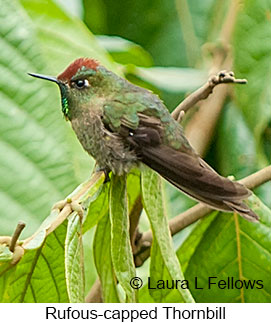
Rufous-headed Chachalaca - © Laura L Fellows and Exotic Birding LLC Dark-backed Wood-Quail - © Laura L Fellows and Exotic Birding LLC Blue Ground-Dove - © Laura L Fellows and Exotic Birding LLC Sapphire Quail-Dove - © Laura L Fellows and Exotic Birding LLC Greater Ani - © Laura L Fellows and Exotic Birding LLC White-necked Jacobin - © Laura L Fellows and Exotic Birding LLC Brown Violetear - © Laura L Fellows and Exotic Birding LLC Green Violetear - © Laura L Fellows and Exotic Birding LLC Amethyst-throated Sunangel - © Laura L Fellows and Exotic Birding LLC Gorgeted Sunangel - © Laura L Fellows and Exotic Birding LLC Tourmaline Sunangel - © Laura L Fellows and Exotic Birding LLC Little Sunangel - © Laura L Fellows and Exotic Birding LLC Purple-throated Sunangel - © Laura L Fellows and Exotic Birding LLC Long-tailed Sylph - © Laura L Fellows and Exotic Birding LLC Violet-tailed Sylph - © Laura L Fellows and Exotic Birding LLC Rufous-capped Thornbill - © Laura L Fellows and Exotic Birding LLC Tyrian Metaltail - © Laura L Fellows and Exotic Birding LLC Sapphire-vented Puffleg - © Laura L Fellows and Exotic Birding LLC Collared Inca - © Laura L Fellows and Exotic Birding LLC Collared Inca - © Laura L Fellows and Exotic Birding LLC Rainbow Starfrontlet - © Laura L Fellows and Exotic Birding LLC Buff-winged Starfrontlet - © Laura L Fellows and Exotic Birding LLC Sword-billed Hummingbird - © Laura L Fellows and Exotic Birding LLC Sword-billed Hummingbird - © Laura L Fellows and Exotic Birding LLC Buff-tailed Coronet - © Laura L Fellows and Exotic Birding LLC Buff-tailed Coronet - © Laura L Fellows and Exotic Birding LLC Chestnut-breasted Coronet - © Laura L Fellows and Exotic Birding LLC Chestnut-breasted Coronet - © Laura L Fellows and Exotic Birding LLC Chestnut-breasted Coronet - © Laura L Fellows and Exotic Birding LLC White-booted Racket-tail - © James F Wittenberger and Exotic Birding LLC Fawn-breasted Brilliant - © Laura L Fellows and Exotic Birding LLC Empress Brilliant - © Laura L Fellows and Exotic Birding LLC White-bellied Woodstar - © Laura L Fellows and Exotic Birding LLC Western Emerald - © Laura L Fellows and Exotic Birding LLC Crowned Woodnymph - © Laura L Fellows and Exotic Birding LLC Rufous-tailed Hummingbird - © Laura L Fellows and Exotic Birding LLC Andean Emerald - © Laura L Fellows and Exotic Birding LLC Andean Emerald - © Laura L Fellows and Exotic Birding LLC Glittering-throated Emerald - © Laura L Fellows and Exotic Birding LLC Violet-bellied Hummingbird - © Laura L Fellows and Exotic Birding LLC Fasciated Tiger-Heron - © Laura L Fellows and Exotic Birding LLC Gray-backed Hawk - © Laura L Fellows and Exotic Birding LLC Gray-backed Hawk - © Laura L Fellows and Exotic Birding LLC Crested Owl - © Laura L Fellows and Exotic Birding LLC Masked Trogon - © Laura L Fellows and Exotic Birding LLC Broad-billed Motmot - © Laura L Fellows and Exotic Birding LLC Toucan Barbet - © Laura L Fellows and Exotic Birding LLC Crimson-rumped Toucanet - © Laura L Fellows and Exotic Birding LLC Golden-olive Woodpecker - © Laura L Fellows and Exotic Birding LLC Maroon-tailed Parakeet - © Laura L Fellows and Exotic Birding LLC Spot-backed Antbird - © Laura L Fellows and Exotic Birding LLC Giant Antpitta - © Laura L Fellows and Exotic Birding LLC Yellow-breasted Antpitta - © Laura L Fellows and Exotic Birding LLC White-bellied Antpitta - © Laura L Fellows and Exotic Birding LLC Blackish Tapaculo - © Laura L Fellows and Exotic Birding LLC Strong-billed Woodcreeper - © Laura L Fellows and Exotic Birding LLC Pacific Hornero - © Laura L Fellows and Exotic Birding LLC Stout-billed Cinclodes - © Laura L Fellows and Exotic Birding LLC Streak-capped Treehunter - © Laura L Fellows and Exotic Birding LLC Pearled Treerunner - © Laura L Fellows and Exotic Birding LLC White-chinned Thistletail - © Laura L Fellows and Exotic Birding LLC Line-cheeked Spinetail - © Laura L Fellows and Exotic Birding LLC Green-and-black Fruiteater - © Laura L Fellows and Exotic Birding LLC Andean Cock-of-the-rock - © Laura L Fellows and Exotic Birding LLC Andean Cock-of-the-rock - © Laura L Fellows and Exotic Birding LLC Long-wattled Umbrellabird - © Laura L Fellows and Exotic Birding LLC One-colored Becard - © Laura L Fellows and Exotic Birding LLC Cinnamon Flycatcher - © Laura L Fellows and Exotic Birding LLC White-banded Tyrannulet - © Laura L Fellows and Exotic Birding LLC Plain-capped Ground-Tyrant - © James F Wittenberger and Exotic Birding LLC Black-billed Shrike-Tyrant - © Laura L Fellows and Exotic Birding LLC Dusky-capped Flycatcher - © Laura L Fellows and Exotic Birding LLC Turquoise Jay - © Laura L Fellows and Exotic Birding LLC White-tailed Jay - © Laura L Fellows and Exotic Birding LLC Inca Jay - © Laura L Fellows and Exotic Birding LLC Black-capped Donacobius - © Laura L Fellows and Exotic Birding LLC Fasciated Wren - © Laura L Fellows and Exotic Birding LLC White-capped Dipper - © Laura L Fellows and Exotic Birding LLC Pale-naped Brushfinch - © Laura L Fellows and Exotic Birding LLC White-winged Brushfinch - © Laura L Fellows and Exotic Birding LLC Scarlet-rumped Cacique - © Laura L Fellows and Exotic Birding LLC Yellow-rumped Cacique - © Laura L Fellows and Exotic Birding LLC Russet-crowned Warbler - © Laura L Fellows and Exotic Birding LLC Spectacled Redstart - © James F Wittenberger and Exotic Birding LLC Red-hooded Tanager - © Laura L Fellows and Exotic Birding LLC White-shouldered Tanager - © Laura L Fellows and Exotic Birding LLC Hooded Mountain-Tanager - © Laura L Fellows and Exotic Birding LLC Blue-capped Tanager - © Laura L Fellows and Exotic Birding LLC Scarlet-bellied Mountain-Tanager - © Laura L Fellows and Exotic Birding LLC Golden-crowned Tanager - © Laura L Fellows and Exotic Birding LLC Masked Tanager - © Laura L Fellows and Exotic Birding LLC Blue-and-black Tanager - © Laura L Fellows and Exotic Birding LLC Turquoise Tanager - © Laura L Fellows and Exotic Birding LLC Paradise Tanager - © Laura L Fellows and Exotic Birding LLC Green-and-gold Tanager - © Laura L Fellows and Exotic Birding LLC Golden Tanager - © Laura L Fellows and Exotic Birding LLC Yellow-tufted Dacnis - © Laura L Fellows and Exotic Birding LLC Black-faced Dacnis - © Laura L Fellows and Exotic Birding LLC Green Honeycreeper - © Laura L Fellows and Exotic Birding LLC Glossy Flowerpiercer - © Laura L Fellows and Exotic Birding LLC Masked Flowerpiercer - © Laura L Fellows and Exotic Birding LLC Masked Flowerpiercer - © Laura L Fellows and Exotic Birding LLC Black-backed Bush Tanager - © Laura L Fellows and Exotic Birding LLC Chestnut-bellied Seed-Finch - © Laura L Fellows and Exotic Birding LLC Grayish Saltator - © Laura L Fellows and Exotic Birding LLC Black-cowled Saltator - © Laura L Fellows and Exotic Birding LLC
button Full Description

DAY 1 - GUAYAQUIL

International flights arrive by evening. Overnight at a hotel in Guayaquil.

DAY 2 - MANGLARES-CHURUTE & BUENAVENTURA RESERVE

We'll depart early for Buenaventura Reserve, driving south toward Manglares-Churute Reserve, located about 45-min south of the city. The habitat en route and at the reserve is a mix of semi-humid forest, lagoons, and mangroves. The open country along the way is prime habitat for seedeaters and finches such as Large-billed Seed-Finch, Lesser Seed-Finch, and Saffron Finch. We should also see the lovely little Pacific Parrotlet and have a very good chance of seeing Horned Screamers around the rice fields.

Habitat in the Manglares-Churute Reserve along the road is mainly lowland deciduous forest and scrub. Our main target species there is the Pacific subspecies of the striking Tropical Royal-Flycatcher, a possible future split. Other birds possible there include Ecuadorian Ground Dove, Gray-cheeked Parakeet, Red-billed Scythebill, and Ecuadorian Thrush. After some roadside birding, we'll continue on to the Buenaventura Reserve located between the towns of Saracay and Portovelo. Along the way we'll make some birding stops at the Santa Rosa Marshes and elsewhere to view various widely distributed wetland species including shorebirds, herons, bulls, and terns along with some woodland species in forest patches such as Black-cheeked Woodpecker, Red-rumped Woodpecker, perhaps Jet Antbird, Sooty-headed Tyrannulet, Black-tailed Flycatcher, Rusty-margined Flycatcher, Lemon-rumped Tanager, and Yellow-bellied Seedeater.

We'll arrive at Buenaventura Reserve some time after lunch. Once there, we'll have time to view hummingbirds coming to feeders and flowering plants in the gardens, including White-tipped Sicklebill, White-whiskered Hermit, Long-billed Hermit, Green Thorntail, Violet-tailed Sylph, and Andean Emerald. Fruit feeders near the lodge attract birds such as Rufous-headed Chcchalaca and Pale-mantled Aracari. In late afternoon we'll hike down a short but steep trail into lowland forest of a ravine where we have a very good chance of seeing the spectacular Long-wattled Umbrellabird displaying on a lek. Overnight at Umbrellabird Lodge.

DAY 3 - BUENAVENTURA RESERVE

We'll spent much of this day birding the upper section of Buenaventura Reserve. This area is in cloud forest and can be foggy, but the fog should burn off and allow excellent birding. We'll be mainly birding along a dirt road but will likely spend a little time on some muddy, occasionally steep trails. Our main target species is the endemic El Oro Parakeet, whose main population occurs in the reserve. We may be able to visit a nest site if in season. At other times we have a very good chance of seeing a flock overhead or perched.

Many other birds occur in this section of the reserve. Possibilities include Choco Toucan, the near-endemic Esmeraldas Antbird, the endemic and difficult to see Ecuadorian Tapaculo, Brown-billed Scythebill, the near-endemic Club-winged Manakin, Tumbes Pewee, Ecuadorian Thrush, and Rufous-throated Tanager, and the more widely distributed Golden-naped Tanager, Bay-headed Tanager, Golden Tanager, and Swallow Tanager. Overnight at Umbrellabird Lodge.

DAY 4 - TRANSFER & JORUPE RESERVE

If we didn't see the umbrellabird the previous day, we'll hike back down into the forest to look for it again. We should be able to see it on one of those two occasions. After that, we'll depart for the Jorupe Reserve near the small border town of Macara, about a 4-hour drive. On the way there we'll pass by an area of very nice deciduous forest near El Empalme by mid-afternoon. There we'll stop for some birding, looking among giant Ceiba trees for some specialties such as Tumbes Hummingbird, Elegant Crescentchest, Baird's Flycatcher, Tumbes Sparrow, and White-headed Brushfinch. In a town along the way Chestnut-collared Swallows can normally be found nesting in some old church buildings. We'll arrive at Jorupe Reserve around dusk. Overnight at Urraca Lodge in the reserve.

DAY 5 - JORUPE RESERVE

Jorupe Reserve protects some undisturbed lowland deciduous and evergreen forest, some of the last such forest remaining in Ecuador. Pre-dawn birding will hopefully find the elusive West Peruvian Screech-Owl, which is most commonly calling early in the rainy season. At lower elevation, the forest understory is habitat for the vulnerable Blackish-headed Spinetail, which can still be reliably seen. Pale-browed Tinamous are present and sometimes calling but rarely seen. White-tailed Jays make their presence known with loud calling. More difficult are Watkins's Antpitta and Elegant Crescentchest. Other possibilities include several raptors and doves, Tumbes Swift, the nomadic Gray-capped Cuckoo, Long-billed Starthroat, Ecuadorian Trogon, Scarlet-backed Woodpecker, Ecuadorian Piculet, Henna-hooded Foliage-gleaner, Tawny-crowned Pygmy-Tyrant, Snowy-throated Kingbird, Fasciated Wren, Superciliated Wren, Black-and-white Tanager, Ash-breasted Sierra-Finch, and White-edged Oriole.

At higher elevation, semi-humid shrubbery and stunted woodlands offer Chapman's Antshrike, Rufous-necked Foliage-gleaner, Line-cheeked Spinetail, Loja Tyrannulet, Tumbesian Tyrannulet, Silver-backed Tanager, White-winged Brushfinch, and Gray-browed Brushfinch. At the top of the ridge additional species are present. Specials include Rainbow Starfrontlet, Purple-throated Sunangel, Green-tailed Trainbearer, the bamboo specialist Gray-headed Antbird, Blackish Tapaculo, the dazzling but difficult to see Black-crested Tit-Tyrant, Rufous-crowned Tody-Tyrant, Jelski's Chat-Tyrant, Slaty-backed Nightingale-Thrush, Rufous-chested Tanager, Blue-capped Tanager, White-sided Flowerpiercer, Black-cowled Saltator, and Bay-crowned Brushfinch along with other species. Also possible are the difficult Scaled Antpitta, the tiny Leymebamba Antpitta recently discovered in Ecuador, and Piura Hemispingus. Overnight at Urracu Lodge.

DAY 6 - TRANSFER, UTUANA RESERVE, & TAPICHALACA RESERVE

We'll depart early to do some birding at two somewhat higher elevation sites. First stop is some patches of forest near the town of Sozoranga, located about 45 minutes away. There, we'll look for Tumbesian endemics like Chapman's Antshrike, Tumbesian Tyrannulet, Maranon Tyrannulet, Tumbes Chat-Tyrant, and Bay-crowned Brushfinch. We'll also want to see the "Loja" subspecies of Amazilian Hummingbird, a possible future split, which occurs at higher elevation and has less extensive rufous coloration than the nominate forms. From there we'll continue on to Utuana Reserve, a medium elevation forest, about an hour and a quarter farther east. This reserve offers another chance for species missed at Jorupe along with a few new species of interest, including Purple-crowned Fairy, Purple-throated Sunangel, Green-tailed Trainbearer, Mountain Velvetbreast, Peruvian Sheartail, White-bellied Woodstar, Chapman's Antshrike, Chestnut-crowned Antpitta, Red-crested Cotinga, Blue-capped Tanager, and Black-cowled Saltator.

After a full morning of birding at these two sites, we'll continue on to Tapichalaca, stopping for a short time en route in the Catamayo Valley to look for some dry scrub birds such at Short-tailed Field Tyrant, Tumbes Sparrow, Peruvian Meadowlark, Ash-breasted Sierra Finch, Band-tailed Sierra Finch, Paqrrot-billed Seedeater, Chestnut-throated Seedeater, and Band-tailed Seedeater. Overnight at Casa Simpson Lodge in Tapichalaca Reserve.

DAY 7 - TAPICHALACA RESERVE

The higher elevation site at Tapichalaca offers pristine cloud forest on the eastern slope of the Andes Mountains. A key target species here is the recently discovered and elusive Jocotoco Antpitta. 15 years ago, this species was notoriously difficult to see. Then a local ranger began conditioning the bird to come out on a trail inside the Bombuscaro section of Podacarpus National Park, requiring a considerable hike very early in the morning. Now, the bird is best seen at Tapichalaca, where an earthworm feeding station lures this wonderful antpitta into view. Reaching this feeding station requires a short but in some places steep hike along a trail that can be slippery and muddy. The regular feeding time is at 8:00am, so we can take our time getting up there. As a bonus, this feeding station also attracts the very shy Chestnut-naped Antpitta as well.

Much of the birding at Tapichalaca is along the road near our lodge, so the birding is quite easy. Lots of species are found in the forest surrounding the lodge and road. We can surely expect to see mixed species flocks moveing through the forest along the road. Species typically found in these flocks include Crimson-mantled Woodpecker, Pearled Treerunner, Barred Fruiteater, Black-capped Tyrannulet, Black-capped Hemispingus, Hooded Mountain Tanager, Lacrimose Mountain Tanager, Blue-backed Conebill, Bluish Flowerpiercer, Masked Flowerpiercer, and sometimes even a Plushcap. In dense stands of bamboo, we look for specialist species of that habitat such as the difficult Equatorial Antpitta, Ash-colored Tapaculo, and Chusquea Tapaculo. In dense shrubbery along the road, we'll be be looking for Lined Antshrike, the range-restricted Rufous-fronted Thornbird, and the near-endemic Marañon Thrush. Overhead, we may well see a raucous flock of Golden-plumed Parakeets, and, if we're very fortunate, the stunning but scarce White-capped Tanager. Sometimes these flocks will perch in nearby trees for the best possible views.

Many other birds make their presence known as well. We are very likely to see species such as Chestnut-collared Swift, Powerful Woodpecker, Speckle-faced Parrot, White-browed Spinetail, Rufous-headed Pygmy-Tyrant, Black-throated Tody-Tyrant, Rufous-breasted Chat-Tyrant, Turquoise Jay, Plain-tailed Wren, Rufous Wren, Glossy-black Thrush, Yellow-breasted Brushfinch, Citrine Warbler, and Black-crested Warbler. We may do some birding along the road below the lodge where Chestnut-crested Cotinga sometimes appears.

Hummingbird feeders around the lodge attract Amethyst-throated Sunangel, Little Sunangel, Long-tailed Sylph, Rufous-capped Thornbill, Glowing Puffleg, Buff-winged Starfrontlet, Chestnut-breasted Coronet, Fawn-breasted Brilliant, White-bellied Woodstar, and others. We'll also do some birding in early evening looking for nocturnal species such as the scarce Andean Potoo as well as White-throated Screech-Owl and Peruvian Pygmy-Owl. Overnight at Casa Simpson Lodge.

DAY 8 - TRANSFER, CERRO TOLEDO, & CAJANUMA

We'll depart very early for a birding excursion up Cerro Toledo while on our way to the city of Loja. The unpaved road reaches the upper slopes of this mountain to elfin forest where our primary target species, the near-endemic, high-altitude Neblina Metaltail occurs. This very localized species is known from only a very few sites in Ecuador and northern Peru. This same site is also home to Great Sapphirewing and Rainbow-bearded Thornbill along with Scaly-naped Parrot, Paramo Tapaculo, Mouse-colored Thistletail, White-throated Tyrannulet, Crowned Chat-Tyrant, Glossy Flowerpiercer, and Paramo Seedeater.

From there, we'll drive to Loja, arriving in time for lunch. After lunch, we'll drive up the mountain to the Cajanuma sector of Podocarpus National Park. Possibilities there include Purple-collared Woodstar, Barred Fruiteater, Pale-footed Swallow, and Red-hooded Tanager. Overnight at a hotel in Loja.

DAY 9 - TRANSFER & RIO NANGARITZA

We'll depart early for our next destination in the rather remote Nangaritza River Valley of the Cordillera del Condor. The transfer takes about 3½ hours of driving, but the last two hours are along a birdy stretch of dirt road, so we'll stop for some birding en route and not arrive until lunch. We can expect to see Channel-billed Toucan, Yellow-tufted Woodpecker, Little Woodpecker, Long-tailed Tyrant, Violaceous Jay, Yellow-browed Sparrow, Masked Tanager, and Chestnut-bellied Seedeater. During mid-day, we'll spend some time on the veranda behind the lodge viewing hummingbirds visiting the feeders. The main species there is the Gray-breasted Sabrewing. Of more interest is the Peruvian Racket-tail, a recent split from the Booted Racket-tail.

That afternoon we should have time for a boat trip through spectacular scenery down the Nangaritza River. Along the river, White-banded Swallows are common. The usual plan is to take the boat to a place to step ashore along the Nuevo Pariso Road about half way to Shaime. We'll then bird our way along this dirt road back toward the cabanas. Possible birds along this road include Speckled Chachalaca, Black Caracara, Laughing Falcon, Bat Falcon, Red-billed Parrot, Gray-rumped Swift, Greeb-backed Trogon, Amazonian White-tailed Trogon, Purplish Jacamar, Gilded Barbet, Lemon-throated Barbet, Chestnut-eared Aracari, Dark-breasted Spinetail, Long-tailed Tyrant, Crowned Slaty Flycatcher, Yellow-cheeked Becard, Thrush-like Wren, Fulvous Shrike-Tanager, Yellow-bellied Tanager, Masked Tanager, and more. An early evening excursion may turn up the magnificent Band-bellied Owl. Overnight Yankuam Lodge.

DAY 10 - MAYCU RESERVE & YANTZAZA

We'll devote all morning this day to birding the Maycu Reserve near our lodge. This reserve protects some nice lower foothill gallery forest. The primary target bird at this site is the lovely Orange-throated Tanager, known only from a few locales in southern Ecuador and northern Peru. It's very possible we will have encountered this species the previous afternoon, but we have another morning to seek it out. A variety of other interesting species are present as well, including White-throated Woodpecker, Dusky-cheeked Foliage-gleaner, Golden-winged Tody-Flycatcher, Red-billed Tyrannulet, Cinnamon Manakin-Tyrant, Wing-banded Wren, and and Golden-collared Honeycreeper.

A long list of more widely distributed species also occur in this area, so we'll have a very productive birding morning, many of which we've likely seen the previous afternoon. These include White Hawk, White-eyed Parakeet, Black-eared Fairy, Gray-breasted Sabrewing, Green-backed Trogon, Lemon-throated Barbet, Gilded Barbet, Scale-breasted Woodpecker, Red-stained Woodpecker, Crimson-crested Woodpecker, Dark-breasted Spinetail, White-shouldered Antshrike, White-browed Warbling Antbird, Peruvian Warbling Antbird, Black-faced Antthrush, Long-tailed Tyrant, Violaceous Jay, Spangled Cotinga, Yellow-bellied Tanager, Opal-crowned Tanager, Opal-rumped Tanager, and Fulvous Shrike-Tanager.

After lunch we'll drive north to the town of Yantzaza. about a 2-hour drive. We'll stop at a nearby local reserve to look for the scarce and local Spangled Coquette. Overnight at a hotel in Yantzaza.

DAY 11 - ZARZA FOREST & COPALINGA LODGE

We'll devote this morning to a remote section of the Cordillera del Condor near the Peruvian border. The isolated El Zarza Wildlife Refuge is infrequently visited on birding tours, but it's home to some very good birds. The habitat is mainly tropical rainforest that transitions into montane cloud forest. Our main target species are the very localized Spectacled Prickletail and Roraiman flycatcher and the near-endemic Bar-winged Wood-Wren. Other excellent birds there include Black-streaked Puffbird, Equatorial Graytail, Rufous-browed Tyrannulet, and Chestnut-bellied Thrush.

After lunch back in town, we'll drive south to the town of Zamora, gateway to the lower section of Podacarpus National Park. The drive will only take about an hour. After arrival, we'll have time to view hummingbirds coming to feeders around our lodge. Species likely to appear include Pale-tailed Barbthroat, Wire-crested Thorntail, Spangled Coquette, Violet-fronted Brilliant, Blue-tailed Emerald, Violet-headed Hummingbird, Fork-tailed Woodnymph, Many-spotted Hummingbird, and Glittering-throated Emerald. After dark, we'll look for Band-bellied Owl, which often calls near the lodge. Overnight at Copalinga Lodge.

DAY 12 - BOMBUSCARO & ZAMORA

This morning will be devoted to birding the Bombuscaro sector of Podocarpus National Park. Birding is along an excellent trail through subtropical forest. A combination of Amazonian lowland and foothill birds are found here. The travel is mostly level, wide, and easy walking. One target species is the nomadic White-breasted Parakeet that sometimes puts in an appearance. Another is the scarce Lanceolated Monklet. Other specialties possible along this trail include Coppery-chested Jacamar, Black-billed Treehunter, Equatorial Graytail, Blue-rumped Manakin, Amazonian Umbrellabird, Foothill Elaenia, and Olive Finch.

Other more widely distributed species normally seen in this bird-rich forest are Gray-fronted Dove, Andean Motmot, Lineated Woodpecker, Ruddy-tailed Flycatcher, Streak-necked Flycatcher, Lemon-browed Flycatcher, Inca Jay, Three-striped Warbler, Yellow-throated Chlorospingus, Orange-eared Tanager, Yellow-bellied Tanager, Spotted Tanager, Golden-eared Tanager, Swallow Tanager, and Subtropical Cacique. More difficult and less often seen are Foothill Antwren and Western Striped-Manakin.

After lunch back at the lodge, we'll drive toward Zamora and do some birding outside town. There's an abandoned airstrip there where birds such as Little Cuckoo, Long-tailed Tyrant, Black-capped Donacobius, Magpie Tanager, and Chestnut-bellied Seedeater. Overnight at Copalinga Lodge.

DAY 13 - OLD LOJA-ZAMORA ROAD & SARAGURO

The morning will be spent birding the Huashapamba Forest Reserve near Saguro. The main target species are the rare and difficult to see Crescent Antpitta and Red-faced Parrot. Other specialties that may be found are Gray-breasted Mountain Toucan, Ocellated Tapaculo, Orange-banded Flycatcher, Black-headed Hemispingus, and Red-hooded Tanager. More widely distributed species include Masked Trogon, Bar-bellied Woodpecker, Sierran Elaenia, Golden-crowned Tanager, Scarlet-bellied Mountain Tanager, Buff-breasted Mountain Tanager, and Pale-naped Brushfinch. Possible hummingbirds include Mountain Velvetbreast, Buff-winged Starfrontlet, Glowing Pufflet, Sapphire-vented Puffleg, and Tyrain Metaltail. Mid-day transfer to the town of La Untion, with some birding en route that may produce Shining Sunbeam, Black-tailed Trainbearer, Tufted Tit-Tyrant, Black-billed Tyrant, Chiguanco Thrush, Black Flowerpiercer, and Hooded Siskin. Night at a hotel in La Union.

We'll depart after early breakfast to do some very fine birding along the first stretch of the old Loja-Zamora Road. The bushes and scrub along the road is home to a surprising diversity of species, some most easily seen there. Among these are the more orange-collared Andean Cock-of-the-Rock along with Lined Antshrike, Ecuadorian Tyrannulet, and Olivaceous Greenlet. Sometimes, mixed species flocks appear comprisec of species such as Montane Foliage-gleaner, Spotted Tanager, Paradise Tanager, Blue Dacnis, Chestnut-vented Conebill, and Bananaquit. Other birds often found along the road and river include Green-fronted Lancebill, Golden-tailed Sapphire, Short-tailed Hawk, Spectacled Bristle-Tyrant, Russet-backed Oropendola, Orange-eared Tanager, Yellow-bellied Tanager, Bay-headed Tanager, and Golden-eared Tanager.

We'll then continue driving north toward Loja and beyond to the town of Saraguro. If we have the time, we'll stop at the nearby Huashapampba community forest along the way to look for the rare Red-faced Parrot, a species most commonly seen in afternoons. Overnight at a hotel in Saraguro.

DAY 14 - CERRO ACACANA & HUASHAPAMBA REESRVE

This morning we'll drive up a mountain road into the forest near the treeline of Cerro Acacana. Our primary target bird is the striking Crescent-faced Antpitta, a denzien of bamboo-laden cloud forest high in the Andes. This very localized near-endemic inhabits the undergrowth of this forest below the treeling. It will take some effort to coax this species into view as it occurs mainly in dense patches of bamboo. Other notable birds of this forest include Bearded Guan, Glowing Puffleg, Flammulated Treehunter, Agile Tit-Tyrant, Masked Mountain Tanager, and Black-headed Hemispingus. After returning to town for lunch, we'll likely revisit the Huashapamba community forest that afternoon. Overnight at a hotel in Saraguro.

DAY 15 - CERRO DE ARCOS & TRANSFER

We must depart very early this morning to reach our next birding locale, the temperate forest on Cerro de Arcos. In 2017 a new hummingbird species was found on this mountain, the Blue-throated Hillstar. This critically endangered species is only known from three sites in the southern Ecuadorian Andes. Cerro de Arcos is the only one of these that is easily accessible. We have all morning to find this species, and we're very likely to succeed. That afternoon we'll transfer to the town of Santa Isabel. Overnight at a hotel in Santa Isabel.

DAY 16 - YUNGILLA RESERVE & TRANSFER

The morning will be spent birding a small reserve at Yunguilla. The reserve was created to protect the critically endangered Pale-headed Brushfinch, which was thought to be extinct until a small population was discovered at this site in 1998. With the assistance of a local guide, we'll walk the fairly easy trail into the reserve, where we can be confident of seeing this species.

Other interesting species include Black-lored Yellowthroat, along with birds such as Black-chested Buzzard-Eagle, Striped Cuckoo, Purple-collared Woodstar, Chestnut-crowned Antpitta, Rufous-browed Peppershrike, Gray-browed Brushfinch, Black-crested Warbler, and Yellow Grosbeak. We can also hope to see the scarce Little Woodstar and Blue Seedeater. From there transfer north through the historic colononial city of Cuenca to the vicinity of El Cajas National Park. After arrival, we'll have a little time for a bit of birding around the lodge. Overnight at a hotel near El Cajas.

DAY 17 - EL CAJAS NATIONAL PARK & TRANSFER

We'll devote the morning birding the higher elevation site at El Cajas. We'll stop to do some birding at a lake along the road going up the mountain where we can expect to see Andean Teal, Slate-colored Coot, Ecuadorian Rail, and possibly Streaked Tuftedcheek, Tawny-rumped Tyrannulet, and Superciliared Hemispingus nearby. A target species farther upslope is the very localized Violet-throated Metaltail, present in open scrub along the road. Near the crest of the pass, we'll check flowering Chuquiragua shrubs for the near-endemic Ecaudorian Hillstar. Other birds in this scrub habitat include Blue-mantled Thornbill, Tawny Antpitta, Stout-billed Cinclodes, Chestnut-winged Cinclodes, Andean Tit-Spinetail, Many-striped Canastero, Streak-backed Canastero, Paramo Ground Tyrant, Red-rumped Bush Tyrant, Brown-backed Chat-Tyrant, White-browed Chat-Tyrant, and Plumbeous Seedeater. Some patches of Polylepis elfin forest on the highest slopes that are home to the very localized Tit-like Dacnis and the more widely distributed Giant Conebill. Also possible are a couple high altitude lakes are home to Andean Duck and Andean Gull, while raptors such as Black-chested Buzzard-Eagle, Variable Hawk, and Carunculated Caracara are sometimes seen nearby.

After a full morning of birding these higher elevation sites along the road, we'll drop down the western slope, driving through a scenic gorge back to Guayaquil. Overnight at a hotel in Guayaquil.

DAY 18 - END OF TOUR

After breakfast at the hotel, we'll head to the airport for our international flights home. The tour ends at the airport.

button Special Birds

DISTRIBUTION CODES

CodeDescriptionCodeDescription
EEndemicLCLocal
NENear EndemicRRRestricted Range

color codes

1Andean TinamouNothoprocta pentlandiiRR
2Curve-billed TinamouNothoprocta curvirostrisNE
3Gray TinamouTinamus tao 
4Brown TinamouCrypturellus obsoletusLC
5Pale-browed TinamouCrypturellus transfasciatusNE
6Horned ScreamerAnhima cornutaLC
7Comb DuckSarkidiornis sylvicolaLC
8White-cheeked PintailAnas bahamensisLC
9Andean DuckOxyura ferrugineaLC
10Wattled GuanAburria aburri 
11Bearded GuanPenelope barbataNE
12Crested GuanPenelope purpurascens 
13Rufous-headed ChachalacaOrtalis erythropteraNE
14Rufous-fronted Wood-QuailOdontophorus erythropsNE
15Dark-backed Wood-QuailOdontophorus melanonotusE
16Plain-breasted Ground DoveColumbina minutaLC
17Ecuadorian Ground DoveColumbina buckleyiNE
18<Maroon-chested Ground Dove>Paraclaravis mondetouraRR
19Ochre-bellied DoveLeptotila ochraceiventrisNE
20Short-tailed NighthawkLurocalis semitorquatusLC
21Scrub NightjarNyctidromus anthonyiNE
22Swallow-tailed NightjarUropsalis segmentataLC
23Lyre-tailed NightjarUropsalis lyraLC
24Andean PotooNyctibius maculosusLC
25OilbirdSteatornis caripensisLC
26/Chimney Swift/Chaetura pelagica 
27White-tipped SwiftAeronautes montivagusLC
28White-whiskered HermitPhaethornis yaruquiNE
29Black-throated HermitPhaethornis atrimentalisLC
30Gray-chinned HermitPhaethornis griseogularisLC
31White-throated DaggerbillSchistes albogularisNE
32Amethyst-throated SunangelHeliangelus amethysticollisRR
33Gorgeted SunangelHeliangelus strophianusNE
34Tourmaline SunangelHeliangelus exortisNE
35Little SunangelHeliangelus micrasterNE
36Purple-throated SunangelHeliangelus violaNE
37Royal SunangelHeliangelus regalisNE
38Black-bellied ThorntailDiscosura langsdorffiLC
39Spangled CoquetteLophornis stictolophusLC
40Violet-tailed SylphAglaiocercus coelestisNE
41Ecuadorian HillstarOreotrochilus chimborazoNE
42Blue-throated HillstarOreotrochilus cyanolaemusE
43Mountain AvocetbillOpisthoprora eurypteraLC
44Rufous-capped ThornbillChalcostigma ruficepsRR
45Rainbow-bearded ThornbillChalcostigma herraniLC
46Viridian MetaltailMetallura williamiNE
47Violet-throated MetaltailMetallura baroniE
48Neblina MetaltailMetallura odomaeNE
49Greenish PufflegHaplophaedia aureliaeLC
50Hoary PufflegHaplophaedia lugensNE
51Brown IncaCoeligena wilsoniNE
52Rainbow StarfrontletCoeligena irisNE
53Buff-winged StarfrontletCoeligena lutetiaeRR
54Sword-billed HummingbirdEnsifera ensiferaLC
55Buff-tailed CoronetBoissonneaua flavescensRR
56Velvet-purple CoronetBoissonneaua jardiniNE
57Rufous-gaped HillstarUrochroa bougueriNE
58Purple-bibbed WhitetipUrosticte benjaminiNE
59Black-throated BrilliantHeliodoxa schreibersiiLC
60Empress BrilliantHeliodoxa imperatrixNE
61Short-tailed WoodstarMyrmia micruraNE
62Purple-collared WoodstarMyrtis fannyNE
63Little WoodstarChaetocercus bombus 
64Gorgeted WoodstarChaetocercus heliodorRR
65Purple-throated WoodstarPhilodice mitchelliiNE
66Western EmeraldChlorostilbon melanorhynchusNE
67Napo SabrewingCampylopterus villaviscensio 
68White-vented PlumeleteerChalybura buffoniiRR
69Tumbes HummingbirdThaumasius baeriNE
70Amazilia HummingbirdAmazilis amaziliaNE
71Ecuadorian RailRallus aequatorialisLC
72Spotted RailPardirallus maculatusRR
73Plumbeous RailPardirallus sanguinolentusLC
74Uniform CrakeAmaurolimnas concolorLC
75Brown Wood-RailAramides wolfiNE
76Rufous-necked Wood-RailAramides axillarisLC
77Slate-colored CootFulica ardesiacaRR
78Russet-crowned CrakeRufirallus viridisRR
79Peruvian Thick-kneeHesperoburhinus superciliarisLC
80Imperial SnipeGallinago imperialisLC
81Noble SnipeGallinago nobilis 
82/Semipalmated Sandpiper/Calidris pusilla 
83Kelp GullLarus dominicanusRR
84\Peruvian Tern\Sternula lorata 
85|Elegant Tern|Thalasseus elegans 
86Chilean FlamingoPhoenicopterus chilensisLC
87Silvery GrebePodiceps occipitalisLC
88White IbisEudocimus albusRR
89Andean CondorVultur gryphusLC
90Pearl KiteGampsonyx swainsoniiLC
91White-tailed KiteElanus leucurusLC
92Ornate Hawk-EagleSpizaetus ornatus 
93Black-and-white Hawk-EagleSpizaetus melanoleucusLC
94Black-and-chestnut EagleSpizaetus isidoriLC
95Crested EagleMorphnus guianensis 
96Cinereous HarrierCircus cinereusLC
97Semicollared HawkMicrospizias collarisLC
98Barred HawkMorphnarchus princepsLC
99Common Black HawkButeogallus anthracinusRR
100Solitary EagleButeogallus solitariusLC
101Gray-backed HawkPseudastur occidentalisNE
102Peruvian Screech-OwlMegascops roboratusNE
103Cloud-forest Pygmy-OwlGlaucidium nubicolaNE
104Black-and-white OwlStrix nigrolineataLC
105Stygian OwlAsio stygiusLC
106Short-eared OwlAsio flammeusLC
107Buff-fronted OwlAegolius harrisiiLC
108Ecuadorian TrogonTrogon mesurusNE
109Western Striolated-PuffbirdNystalus obamaiLC
110Black-streaked PuffbirdMalacoptila fulvogularisRR
111White-faced NunbirdHapaloptila castaneaLC
112Coppery-chested JacamarGalbula pastazaeNE
113Toucan BarbetSemnornis ramphastinusNE
114Chestnut-tipped ToucanetAulacorhynchus derbianusLC
115Gray-breasted Mountain-ToucanAndigena hypoglaucaRR
116Plate-billed Mountain-ToucanAndigena laminirostrisNE
117Yellow-throated ToucanRamphastos ambiguus 
118Ecuadorian PiculetPicumnus sclateriNE
119Yellow-vented WoodpeckerVeniliornis dignusRR
120Guayaquil WoodpeckerCampephilus gayaquilensisRR
121Carunculated CaracaraDaptrius carunculatusNE
122Mountain CaracaraDaptrius megalopterusRR
123Blue-fronted ParrotletTouit dilectissimusLC
124Spot-winged ParrotletTouit stictopterusLC
125Gray-cheeked ParakeetBrotogeris pyrrhopteraNE
126Red-faced ParrotHapalopsittaca pyrrhopsNE
127Rose-faced ParrotPyrilia pulchraNE
128Lilacine AmazonAmazona lilacinaE
129Scaly-naped AmazonAmazona mercenariusLC
130Pacific ParrotletForpus coelestisNE
131El Oro ParakeetPyrrhura orcesiE
132White-necked ParakeetPyrrhura albipectusNE
133Military MacawAra militarisLC
134<Golden-plumed Parakeet>Leptosittaca branickiiRR
135Cordilleran ParakeetPsittacara frontalusNE
136Red-masked ParakeetPsittacara erythrogenysNE
137Fulvous AntshrikeFrederickena fulvaLC
138Chapman's AntshrikeThamnophilus zarumaeNE
139Lined AntshrikeThamnophilus tenuepunctatus 
140Collared AntshrikeThamnophilus bernardiNE
141White-shouldered AntshrikeThamnophilus aethiopsLC
142White-streaked AntvireoDysithamnus leucostictusLC
143Ornate StipplethroatEpinecrophylla ornataLC
144Yellow-breasted AntwrenHerpsilochmus axillaris 
145Jet AntbirdCercomacra nigricansLC
146Gray-headed AntbirdAmpelornis griseicepsNE
147Esmeraldas AntbirdSipia nigricaudaNE
148Zimmer's AntbirdSciaphylax castaneaLC
149Elegant CrescentchestMelanopareia elegansNE
150Chestnut-crowned GnateaterConopophaga castaneicepsLC
151Giant AntpittaGrallaria giganteaNE
152Moustached AntpittaGrallaria alleniNE
153Plain-backed AntpittaGrallaria haplonotaLC
154Watkins's AntpittaGrallaria watkinsiNE
155Yellow-breasted AntpittaGrallaria flavotinctaNE
156Ochre-breasted AntpittaGrallaricula flavirostris 
157Crescent-faced AntpittaGrallaricula lineifronsNE
158Loja TapaculoScytalopus androstictusNE
159Nari¤o TapaculoScytalopus viciniorRR
160Ecuadorian TapaculoScytalopus robbinsiE
161Chusquea TapaculoScytalopus parkeriNE
162Spillmann's TapaculoScytalopus spillmanniNE
163Black-hooded AntthrushFormicarius destructusNE
164Gray-throated LeaftosserSclerurus albigularis 
165Mournful Long-tailed WoodcreeperDeconychura pallidaLC
166Greater ScythebillDrymotoxeres pucheranii 
167Pacific HorneroFurnarius cinnamomeusNE
168Sharp-tailed StreamcreeperLochmias nematuraLC
169Stout-billed CinclodesCinclodes excelsiorNE
170Dusky-cheeked Foliage-gleanerAnabazenops dorsalisLC
171Slaty-winged Foliage-gleanerNeophilydor fuscipenneLC
172Scaly-throated Foliage-gleanerAnabacerthia variegaticepsRR
173Buff-browed Foliage-gleanerSyndactyla rufosuperciliataRR
174Rufous-necked Foliage-gleanerSyndactyla ruficollisNE
175Henna-hooded Foliage-gleanerClibanornis erythrocephalusNE
176Ruddy Foliage-gleanerClibanornis rubiginosusLC
177Uniform TreehunterThripadectes ignobilisNE
178Streak-capped TreehunterThripadectes virgaticepsRR
179Streak-backed CanasteroAsthenes wyattiLC
180Mouse-colored ThistletailAsthenes griseomurinaNE
181Equatorial GraytailXenerpestes singularisNE
182Spectacled PrickletailSiptornis striaticollisLC
183Line-cheeked SpinetailCranioleuca antisiensisNE
184Blackish-headed SpinetailSynallaxis tithysNE
185Dusky SpinetailSynallaxis moestaLC
186Necklaced SpinetailSynallaxis stictothoraxNE
187Jet ManakinChloropipo unicolorNE
188Club-winged ManakinMachaeropterus deliciosusNE
189Orange-breasted FruiteaterPipreola jucundaNE
190Chestnut-bellied CotingaDoliornis remseniNE
191Chestnut-crested CotingaAmpelion rufaxillaRR
192Gray-tailed PihaSnowornis subalarisLC
193Olivaceous PihaSnowornis cryptolophusLC
194Amazonian UmbrellabirdCephalopterus ornatusLC
195Long-wattled UmbrellabirdCephalopterus penduligerNE
196Dusky PihaLipaugus fuscocinereusLC
197Foothill SchiffornisSchiffornis aeneaNE
198Andean LaniisomaLaniisoma buckleyiLC
199Green-backed BecardPachyramphus viridisNE
200Slaty BecardPachyramphus spodiurusNE
201SharpbillOxyruncus cristatusRR
202Rufous-breasted FlycatcherLeptopogon rufipectusLC
203Ecuadorian TyrannuletPhylloscartes gualaquizae 
204White-bellied Pygmy-TyrantMyiornis albiventrisRR
205Black-capped Pygmy-TyrantMyiornis atricapillusRR
206Black-throated Tody-TyrantHemitriccus granadensisLC
207Buff-throated Tody-TyrantHemitriccus rufigularisRR
208Cliff FlycatcherHirundinea ferrugineaLC
209Handsome FlycatcherNephelomyias pulcherRR
210Orange-banded FlycatcherNephelomyias lintoniNE
211Rufous-winged TyrannuletMecocerculus calopterusNE
212Black-crested Tit-TyrantAnairetes nigrocristatusNE
213Tumbesian TyrannuletNesotriccus tumbezanusNE
214Maranon TyrannuletNesotriccus maranonicusNE
215Subtropical DoraditoPseudocolopteryx acutipennisLC
216Pacific ElaeniaMyiopagis subplacensNE
217Coopmans's ElaeniaElaenia brachypteraNE
218Highland ElaeniaElaenia obscuraLC
219Plumbeous-crowned TyrannuletPhyllomyias plumbeicepsLC
220White-fronted TyrannuletAcrochordopus zeledoniLC
221Red-billed TyrannuletZimmerius cinereicapillaRR
222Choco TyrannuletZimmerius albigularisNE
223Peruvian TyrannuletZimmerius viridiflavusNE
224Fulvous-faced Scrub-TyrantEuscarthmus fulvicepsNE
225Gray-and-white TyrannuletPseudelaenia leucospodiaNE
226Orange-crested FlycatcherMyiophobus phoenicomitraLC
227Roraiman FlycatcherMyiophobus roraimaeLC
228Olive-chested FlycatcherMyiophobus cryptoxanthusNE
229Gray-breasted FlycatcherLathrotriccus griseipectusNE
230/Olive-sided Flycatcher/Contopus cooperi 
231Tumbes PeweeContopus punensisNE
232Blackish PeweeContopus nigrescensLC
233Rufous-tailed TyrantKnipolegus poecilurusLC
234Amazonian Black-TyrantKnipolegus poecilocercusLC
235Spot-billed Ground-TyrantMuscisaxicola maculirostrisRR
236White-tailed Shrike-TyrantAgriornis albicaudaLC
237Jelski's Chat-TyrantSilvicultrix jelskiiNE
238White-browed Chat-TyrantOchthoeca leucophrysLC
239Short-tailed Field TyrantMuscigralla brevicaudaRR
240Ochraceous AttilaAttila torridus 
241Sooty-crowned FlycatcherMyiarchus phaeocephalusNE
242Lemon-browed FlycatcherConopias cinchoneti 
243Baird's FlycatcherMyiodynastes bairdiiNE
244Black-billed PeppershrikeCyclarhis nigrirostrisNE
245Beautiful JayCyanolyca pulchraNE
246White-tailed JayCyanocorax mystacalisNE
247White-thighed SwallowAtticora tibialisLC
248Chestnut-collared SwallowPetrochelidon rufocollarisNE
249Fasciated WrenCampylorhynchus fasciatusNE
250Superciliated WrenCantorchilus superciliarisNE
251Bar-winged Wood-WrenHenicorhina leucopteraNE
252Long-tailed MockingbirdMimus longicaudatusNE
253Black SolitaireEntomodestes coracinusNE
254Chestnut-bellied ThrushTurdus fulviventrisLC
255Plumbeous-backed ThrushTurdus reeveiNE
256(Andean Slaty-Thrush)Turdus nigricepsRR
257Mara¤on ThrushTurdus maranonicusNE
258Pale-vented ThrushTurdus obsoletusLC
259Ecuadorian ThrushTurdus maculirostrisNE
260Chestnut-breasted ChlorophoniaChlorophonia pyrrhophrysRR
261<Yellow-collared Chlorophonia>Chlorophonia flavirostrisRR
262Lesser GoldfinchSpinus psaltriaLC
263<Yellow-bellied Siskin>Spinus xanthogastrusRR
264Saffron SiskinSpinus siemiradzkiiNE
265Tanager FinchOreothraupis arremonopsNE
266Dusky ChlorospingusChlorospingus semifuscusNE
267Tumbes SparrowRhynchospiza stolzmanniNE
268Black-capped SparrowArremon abeilleiNE
269Olive FinchArremon castaneiceps 
270White-rimmed BrushfinchAtlapetes leucopisNE
271White-headed BrushfinchAtlapetes albicepsNE
272Tricolored BrushfinchAtlapetes tricolorRR
273White-winged BrushfinchAtlapetes leucopterusNE
274Pale-headed BrushfinchAtlapetes pallidicepsE
275Bay-crowned BrushfinchAtlapetes seebohmiNE
276Chestnut-headed OropendolaPsarocolius wagleriRR
277White-edged OrioleIcterus graceannaeNE
278Black-lored YellowthroatGeothlypis auricularisNE
279/Cerulean Warbler/Setophaga cerulea 
280/Blackpoll Warbler/Setophaga striata 
281Three-banded WarblerBasileuterus trifasciatusNE
282Choco WarblerMyiothlypis chlorophrysNE
283Gray-and-gold WarblerMyiothlypis fraseriNE
284Ochre-breasted TanagerChlorothraupis stolzmanniNE
285Black-backed GrosbeakPheucticus aureoventrisLC
286Ecuadorian SeedeaterAmaurospiza aequatorialisNE
287Black-faced TanagerSchistochlamys melanopisRR
288Black-and-white TanagerConothraupis speculigeraRR
289White-capped TanagerSericossypha albocristata 
290Black-eared HemispingusSphenopsis melanotisNE
291Moss-backed TanagerBangsia edwardsiNE
292Orange-throated TanagerWetmorethraupis sterrhopteronNE
293Masked Mountain TanagerTephrophilus wetmoreiLC
294Black-chinned Mountain TanagerAnisognathus notabilisNE
295Yellow-throated TanagerIridosornis analisLC
296Glistening-green TanagerChlorochrysa phoenicotisNE
297Rufous-throated TanagerIxothraupis rufigulaNE
298Gray-and-gold TanagerPoecilostreptus palmeriRR
299Silvery TanagerStilpnia viridicollisRR
300Black-capped TanagerStilpnia heineiRR
301Green-throated TanagerStilpnia argyrofengesRR
302Golden-hooded TanagerStilpnia larvataRR
303Metallic-green TanagerTangara labradoridesRR
304Yellow-tufted DacnisDacnis egregiaNE
305Chestnut-vented ConebillConirostrum speciosumLC
306Giant ConebillConirostrum binghamiLC
307Indigo FlowerpiercerDiglossa indigoticaNE
308Rusty FlowerpiercerDiglossa sittoidesLC
309Black-backed Bush TanagerUrothraupis stolzmanniNE
310Tit-like DacnisXenodacnis parinaNE
311Collared Warbling FinchPoospiza hispaniolensisNE
312Saffron FinchSicalis flaveolaRR
313Parrot-billed SeedeaterSporophila peruvianaNE
314Drab SeedeaterSporophila simplexNE
315Large-billed Seed-FinchSporophila crassirostrisLC
316Black-billed Seed-FinchSporophila atrirostrisLC
317<Slate-colored Seedeater>Sporophila schistaceaRR
318Paramo SeedeaterCatamenia homochroa 
319Red-crested FinchCoryphospingus cucullatusRR
320Crimson-breasted FinchRhodospingus cruentusNE
321Yellow-faced GrassquitTiaris olivaceusRR
322Black-winged SaltatorSaltator atripennisNE
323Black-cowled SaltatorSaltator nigricepsNE
324Masked SaltatorSaltator cinctusLC