(Phone/WhatsApp): 206-650-3425
info@exoticbirding.com

EASTERN BOLIVIA TOUR

Duration:13 days, 12 nights
Group Size:2-4
2-3 Price:$5640
4+ Price:$5340
Single Suppl:$300
Est #Species:350-400
Pace:Moderate
Difficulty:Moderate
Best Time:June-Nov
* This tour is available for any dates of your choosing provided guide services and accommodations are available.

Internal flights not included in tour price. May be combined with our Central Bolivia tour.
button Related Tours
     and/or Extensions

Related Tours

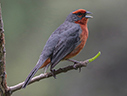
Cochabamba Mountain-Finch - courtesy Cesar Bollaty
Central Bolivia Birding Tour
15 days, 14 nights
2-3 Price: $6580
    (Single Suppl $300)
4+ Price: $6280
    (Single Suppl $300)
Click for Tour Details

Extensions

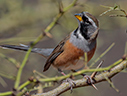
Many-colored Chaco Finch - courtesy Cesar Bollaty
Bolivia Chaco Extension
4 days, 3 nights
2-3 Price: $1400
    (Single Suppl $100)
4+ Price: $1300
    (Single Suppl $100)
Click for Tour Details
button Tour Overview

Two less visited regions of Bolivia not often included in standard birding tours to the country are the somewhat remote Beni region in the north and the semiarid Chaco region in the southeast. The Beni region encompasses a vast area of diverse habitats including Amazonian rainforest near the border with Brazil, vast seasonally flooded savannas, dry cerrado in the northeast, and temperate forest in the Andean foothills. It features a wide variety of birds including a good number of specialties not found in central Bolivia. In contrast, the Gran Chaco region encompasses southeastern Bolivia along with western Paraguay and northwestern Argentina east of the Andes. It has a very different and quite unique biogeography that includes spiny scrublands, deciduous thorny forests dry savanna, and scattered wetlands. It too has its own unique set of specialty birds, many not found in the Santa Cruz area that borders the region. Our eastern Bolivia tour visits these two regions.

The tour begins with a flight from La Paz to the far northern city of Riberalta, located near the border with Brazil. We'll spend most of two days there looking for the endemic Masked Antpitta and some other specialty birds in nearby savanna, cerrado, and rainforest. We then have a rather long drive south to Sadiri Lodge, located within intact temperate forest of Madidi National Park. After spending 3 full days birding this reserve, we'll have another fairly long drive, this time eastward to the city of Trinidad. During our stay there we'll visit a private reserve to seek out the critically endangered Blue-throated Macaw. We then fly to Santa Cruz, where we'll spend a night before heading into the Chaco region. Our base in the Chaco is the town of Camiri, located some 4 hours south of Santa Cruz. During our stay there, we'll spend one full day birding south toward the border with Argentina and one full day birding dry forest in the Andes foothills north of town. We then return to Santa Cruz where the tour ends at the airport.

button Tour Itinerary

Day 1 - Meals: None; Accommodation: Hotel in La Paz; Activity: Arrive in La Paz.
Day 2 - Meals: BLD; Accommodation: Hotel in Riberalta; Activity: Early morning flight to Riberalta. Rest of day birding that area, targeting Masked Antpitta.
Day 3 - Meals: BLD; Accommodation: Hotel in Riberalta; Activity: All day Riberalta.
Day 4 - Meals: BLD; Accommodation: Sadiri Lodge; Activity: All day transfer to Sadiri Lodge (10 hours).
Day 5 - Meals: BLD; Accommodation: Sadiri Lodge; Activity: All day Sadiri Lodge.
Day 6 - Meals: BLD; Accommodation: Sadiri Lodge; Activity: All day Sadiri Lodge.
Day 7 - Meals: BLD; Accommodation: Sadiri Lodge; Activity: All day Sadiri Lodge.
Day 8 - Meals: BLD; Accommodation: Hotel in Trinidad; Activity: Long transfer to Trinidad (about 6½ hours). Birding gallery forest outside Trinidad as time permits.
Day 9 - Meals: BLD; Accommodation: Hotel in Santa Cruza; Activity: Morning birding south of Trinidad for Blue-throated Macaw. Afternoon flight to Santa Cruz.
Day 10 - Meals: Hotel in Camiri; Accommodation: ; Activity: Morning transfer to Camiri, our base in the Chaco region south of Santa Cruz. Remainder of the day birding there.
Day 11 - Meals: BLD; Accommodation: Hotel in Camiri; Activity: All day birding south to the border with Argentina.
Day 12 - Meals: BLD; Accommodation: Hotel in Camiri.; Activity: All day birding some foothill woodlands outside Camiri.
Day 13 - Meals: BL; Accommodation: None; Activity: Morning birding around Camiri. Afternoon transfer to Santa Cruz. Tour ends at the airport for connection to international flight home.

button Accommodations

We'll be staying in comfortable, moderately priced hotels throughout the tour except while at Sadiri Lodge. Accommodations at Sadiri are typical for an ecolodge, with comfortable cabanas in the forest and a dining area where meals are served.

button Included Locales
button Tour Map
button Tour Considerations
:

PACE - The pace of this tour is considered moderate but could be intense depending on the preferences of participants.

DIFFICULTY - Birding in the far north around Riberalta is mostly along roadsides with possibly some fairly flat trails. Birding at Sadiri Lodge of about 12 hours is along forested trails. Trails in the lower area are quite easy, while the trail up and down mountain ridges are moderate to strenuous. Some birding is along flat roadsides. The tour also entails a quite long drive from Riberalta to Sadiri Lodge and from Sadiri Lodge to the town of Trinidad of about 8 hours. Birding south of Santa Cruz in the Chaco region is mostly along fairly flat roadsides. Birding in the dry gallery forests there can sometimes be challenging.

CLIMATE - The Beni region of Bolivia has a tropical monsoon climate. During rainy season from October to May, conditions are hot, very humid, and rainy. Some roads can be impassable. Dry season frm June to September is somewhat cooler and has significantly less rainfall. Wet season in the Chaco region is from November to March. During that time temperatures can be well above 90 degrees and the air can be very humid. From April to October days are mostly dry, sunny, and sometimes windy. Nights are generally much cooler than daytime.

BIRD ACTIVITY - Most birds breed in the Beni region during November to April in the midst of rainy season. The nesting season of Blue-throated Macaws is mainly from October to March, but the birds can be seen during dry season. Forest birds are generally very active throughout the dry season. In the Chaco region, nesting activity is mainly from October to March. Breeding activity and bird vocalizations start during late dry season during September and October. Activity is good throughout wet season but drops off significantly during May to August. During those months the best birding is in gallery forests near permanent water.

PHOTOGRAPHY - Getting photos of birds during this tour is mainly opportunistic, but Sadiri Lodge has hummingbird feeders just outide the dining room that are good for photograghing hummingbirds. Birds in the arid Chaco region can sometimes be fairly easy to photograph as they often perch in the open but can be challenging in dry thorn forests.

button Full Description

DAY 1 - ARRIVE LA PAZ

Arrive La Paz. Overnight in a hotel in La Paz.

DAY 2 - FLIGHT & RIBERALDA

We'll take a very early domestic flight from La Paz to Riberalta, which is located in far northern Bolivia not far from the border with Brazil. The flight arrives in mid morning. Upon arrival we'll immediately go birding. Our primary target species is Masked Antpitta, which is best found near the small town of Marigüal, located an hour or so west of Riberalta. This species occupies riverine habitat of Varzea forest in a very restricted area of northern Bolivia. If the guide has a bird staked out. we should be able to find the bird in a couple hours. Otherwise, it will take some effort. After a hopefully successful excursion to see the antpitta followed by lunch, we'll drive east a half hour to the San Lorenzo pampas area.This dry cerrado region is a unique mix of tropical savanna, forest patches, and seasonally flooded plains. It's home to several range-restricted birds. We'll have the afternoon and early evening to look for Sharp-tailed Tyrant, Rufous-sided Pygmy-Tyrant, Cock-tailed Tyrant, Dark-throated Seedeater, and Black-masked Finch. We should also see Greater Rhea, which regularly occurs there. Overnight at a hotel in Riberalta.

DAY 3 - RIBERALTA

If all went well the preceding day, we'll go north to bird tropical Amazonian rainforest at the Aquicuana Natural Reserve. This infrequently visited reserve offers a second and perhaps better chance of seeing Masked Antpitta if we just couldn't get it the day before. It also offers a chance of seeing the rare-to-uncommon near-endemic Red-necked Aracari, the uncommon near-endemic Large-billed Antwren, the fairly common near-endemic Dusky-green Oropendola, and the scarce and local near-endemic Black-and-tawny Seedeater. Many other more widely distributed species are likely to be seen as well. Overnight in a hotel in Riberalta.

DAY 5 - RIBERALTA & TRANSFER

This day will be devoted to the long drive to Rurrenabaque and then on to Sadiri Lodge. This journey on the once dirt road used to take as much as 18-20 hours during dry season and was impassible during rainy season. Now, thanks to a decade long construction project that was finally completed in 2025, the transfer can now be done in about 7½ hours to the town of Rurrenabaque plus an additional 2½ hours to the lodge. We have the option of going all the way to the lodge or spending a night at a hotel in Rurrenabaque. NIght in a hotel in Rurrenabaque or at Sadiri Lodge.

DAYS 6-8 - SADIRI LODGE

Sadiri Lodge protects some 34,000ha of land within Madidi National Park. The habitat in most of the reserve is tropical rainforest. Some 540 species of birds have been recorded there, and we'll spend 3 full days seeing as many of them as we can. Birding is along a jeep track through the forest as well as on a network of trails within the forest. Many of the trails have steep sections that go up and down the hilly terrain so most of our birding time will be spent along the jeep track. A major appeal of the site is the ability to bird from ridges looking down into the forest canopy along the road, making canopy birds much easier to see. Mixed species flocks abound in the forest and are easy to see because of this topography. There are also hummingbird feeders near the lodge. Over 500 species have been seen around the lodge and the surrounding national park.

Our long list of target birds include the fairly common endemic Bolivian Brushfinch and near-endemics with varying degrees of commonness that includes White-browed Hermit, Blue-moustached Barbet, Rio Madeira Stipplethroat, Ashy Antwren, Brownish-headed Antbird, Slaty Gnatcatcher, Bolivian Recurvebill, Yungas Manakin, Cinnamon-faced Tyrannulet, Yungas Tyrannulet, Dusky-green Oropendola, and Cuzco Warbler. A number of nocturnal birds can be spotted during early evenings near the lodge. These include Great Potoo, Tawny-bellied Screech-Owl, Crested Owl, Band-bellied Owl, Subtropical Pygmy-Owl, and Black-banded Owl.

Among the many other possibilities are Pavonine Cuckoo, White-throated Woodpecker, Rose-fronted Parakeet, Hairy-crested Antbird, Sharp-tailed Streamcreeper, Round-tailed Manakin, Sharpbill, Yungas Tyrannulet, Slaty-capped Shrike-Vireo, Olive Oropendola, and Yellow-shouldered Grosbeak. Hummingbird feeders at the lodge attract a nice variety of species including Gould's Jewelfront, Blue-tailed Emerald, Gray-breasted Sabrewing, and Fork-tailed Woodnymph. Aside from all these species, there is a long list of locally distributed and more widely distributed birds in the reserve that will keep us occupied throughout our visit. Nights at Sadiri Lodge.

DAY 6 - SADIRI LODGE & TRINIDAD

This morning we'll depart early for a 7-hour transfer to the town of Trinidad. We expect to arrive in time for some afternoon birding in gallery forest outside town to look for the near mythical Unicolored Thrush. Other possibilities include Buff-bellied Hermit, Band-tailed Antbird, Beni Grackle, and Gray-headed Tanager. Overnight at a hotel in Trinidad.

DAY 9 - TRINIDAD

Today we'll drive south about 60km to a private reserve near the Beni town of Loreto to look for the critically endangered Blue-throated Macaw at a private reserve near town. The best time to visit is nesting season from November to April during rainy season, but the birds are resident year-round. After returning to Trinidad and having lunch, we'll take a late afternoon flight to Santa Cruz de la Sierra for an overnight stay. Overnight at a hotel in Santa Cruz.

DAY 10 - CAMIRI

The semiarid Chaco region of southeastern Bolivia is rarely included in birding tour itineraries. Some of the Chaco birds can be seen in the Lomas de Arena area, but many are only found farther south. On this day we'll drive south to our base for the next 3 nights, about a 4 hour drive to the town of Camiri. Thanks to a recently paved road, this drive is no longer the challenge it once was. During the transfer we'll pass through a transitional zone of tall, dry forests where we'll spend some time looking for the near-endemic Bolivian Slaty-Antshrike and Stripe-backed Antbird. We'll also pass through some more humid foothill woodlands where we'll stop to look for Turquoise-fronted Amazon, Green-cheeked Parakeet, and Plush-crested Jay. Overnight at a hotel in Camiri.

DAY 11 - SOUTH OF CAMIRI

During this day we'll drive south much the way to the Argentina border. We'll spend all day looking for specialties found in thorn forests, scrub, and savanna of this region. It's essential that we get an early start, as bird activity drops off precipitously once it gets hot during the middle of the day. Probably the best birding in Chaco habitat is the Boyuibe Chaco, located about 2 hours south of Camiri. Here we will be seeking a variety of Chaco specialties including Chaco Chachalaca, Chaco Earthcreeper, the rather scarce Crested Hornero, Little Thornbird, Lark-like Brushrunner, Short-billed Canastero, Fawn-breasted Wren, and Many-colored Chaco Finch. We'll make a special effort to see the secretive Crested Gallito in thorn scrub of the area. A major target species is Black-legged Seriema, more easily seen here than elsewhere. With luck we could even find the very scarce Black-bodied Woodpecker and Spot-backed Falconet and maybe even the rather rare Scimitar-billed Woodcreeper. Other possibilities include White-barred Piculet, Checkered Woodpecker, Cream-backed Woodpecker, and Cinereous Tyrant. At dusk we'll be on the lookout for Little Nightjar. Overnight at a hotel in Camiri.

DAY 12 - CAMIRI

We'll spend our second full day in the Chaco birding some foothill woodlands north of town. Along the road we're sure to see Red-crested Cardinal, Black-capped Warbling Finch, Red-crested Finch, and Golden-billed Saltator. We'll work denser vegetation to ferret out a couple skulkers, Ochre-faced Tody-Flycatcher and Moss-backed Sparrow. We also hope to see Yungas Guan and Ocellated Piculet. We'll eventually reach the town of Launillas, where nearby wetlands offer chances for birds such as Southern Screamer, Comb Duck, Ringed Teal, Brazilian Teal, and Spot-flanked Gallinule. Overnight at a hotel in Camiri.

DAY 13 - CAMIRI & SANTA CRUZ

The plan this day will depend on flight schedule of participants later in the day. We'll likely spend the morning birding around Camiri followed by afternoon transfer back to Santa Cruz. The tour ends at the airport in Santa Cruz.

button Special Birds

DISTRIBUTION CODES

CodeDescriptionCodeDescription
EEndemicLCLocal
NENear EndemicRRRestricted Range

color codes

1Greater RheaRhea americana 
2Gray TinamouTinamus tao 
3White-throated TinamouTinamus guttatus 
4Fulvous Whistling-DuckDendrocygna bicolorLC
5Orinoco GooseOressochen jubata 
6/Cinnamon Teal/Spatula cyanopteraLC
7White-throated Piping-GuanPipile grayi 
8Yungas GuanPenelope bridgesiNE
9Razor-billed CurassowMitu tuberosum 
10Large-tailed DoveLeptotila megaluraNE
11Rufous-vented Ground-CuckooNeomorphus geoffroyiLC
12Silky-tailed NightjarAntrostomus sericocaudatusLC
13Long-tailed PotooNyctibius aethereusLC
14\Chapman's Swift\Chaetura chapmaniLC
15Buff-tailed SicklebillEutoxeres condaminiLC
16White-browed HermitPhaethornis stuartiNE
17Buff-bellied HermitPhaethornis subochraceusNE
18Brown VioletearColibri delphinaeRR
19Black-eared FairyHeliothryx auritusLC
20Amethyst WoodstarCalliphlox amethystinaLC
21Many-spotted HummingbirdTaphrospilus hypostictusRR
22Rufous-throated SapphireHylocharis sapphirinaLC
23Pale-winged TrumpeterPsophia leucoptera 
24|Buff-breasted Sandpiper|Calidris subruficollis 
25\White-faced Ibis\Plegadis chihiRR
26Boat-billed HeronCochlearius cochleariusLC
27Agami HeronAgamia agamiLC
28Ornate Hawk-EagleSpizaetus ornatus 
29Black-and-white Hawk-EagleSpizaetus melanoleucusLC
30Crested EagleMorphnus guianensisLC
31Harpy EagleHarpia harpyjaLC
32Gray-bellied HawkAccipiter poliogaster 
33Tiny HawkMicrospizias superciliosusLC
34Slender-billed KiteHelicolestes hamatusLC
35Solitary EagleButeogallus solitarius 
36White-rumped HawkParabuteo leucorrhousRR
37#Zone-tailed Hawk#Buteo albonotatusLC
38Foothill Screech-OwlMegascops roraimaeRR
39Burrowing OwlAthene cuniculariaRR
40Bronzy JacamarGalbula leucogastraLC
41Blue-moustached BarbetEubucco versicolorNE
42Red-necked AracariPteroglossus bitorquatusNE
43Ocellated PiculetPicumnus dorbignyanusRR
44Dot-fronted WoodpeckerVeniliornis frontalisNE
45Ringed WoodpeckerCeleus torquatus 
46Slaty-backed Forest-FalconMicrastur mirandolleiLC
47Turquoise-fronted AmazonAmazona aestiva 
48White-bellied ParrotPionites leucogaster 
49Blue-headed MacawPrimolius couloni 
50Blue-throated MacawAra glaucogularisE
51Military MacawAra militaris 
52Chestnut-backed AntshrikeThamnophilus palliatusRR
53Plain-throated AntwrenIsleria hauxwelliLC
54Rio Madeira StipplethroatEpinecrophylla amazonicaNE
55Ashy AntwrenMyrmotherula griseaNE
56Leaden AntwrenMyrmotherula assimilisRR
57Large-billed AntwrenHerpsilochmus longirostrisNE
58Brownish-headed AntbirdMyrmelastes brunneicepsNE
59Ash-throated GnateaterConopophaga peruvianaLC
60Slaty GnateaterConopophaga ardesiacaNE
61Masked AntpittaHylopezus auricularisE
62Gray-throated LeaftosserSclerurus albigularis 
63Long-billed WoodcreeperNasica longirostrisRR
64Point-tailed PalmcreeperBerlepschia rikeriLC
65Bolivian RecurvebillSyndactyla striataNE
66Eastern WoodhaunterAutomolus subulatusLC
67Orange-fronted PlushcrownMetopothrix aurantiacaLC
68Beni SofttailThripophaga dimorphaE
69Yungas ManakinChiroxiphia bolivianaNE
70White-bearded ManakinManacus manacusLC
71Plum-throated CotingaCotinga maynanaLC
72Chestnut-crowned BecardPachyramphus castaneusLC
73Pink-throated BecardPachyramphus minorLC
74Many-colored Rush TyrantTachuris rubrigastraLC
75Cinnamon-faced TyrannuletPhylloscartes parkeriNE
76Buff-throated Tody-TyrantHemitriccus rufigularisRR
77Yellow TyrannuletCapsiempis flaveolaLC
78Yungas TyrannuletPhyllomyias weedeniNE
79Red-billed TyrannuletZimmerius cinereicapillaLC
80/Olive-sided Flycatcher/Contopus cooperi 
81Southern Tropical PeweeContopus cinereusLC
82Rufous-bellied Bush-TyrantMyiotheretes fuscorufusNE
83Streamer-tailed TyrantGubernetes yetapaLC
84Long-tailed TyrantColonia colonusLC
85Cinnamon AttilaAttila cinnamomeusLC
86Three-striped FlycatcherConopias trivirgatusLC
87Sulphury FlycatcherTyrannopsis sulphureaLC
88\Gray-eyed Greenlet\Hylophilus amaurocephalusE
89Ashy-headed GreenletHylophilus pectoralisLC
90(White-rumped Swallow)Tachycineta leucorrhoaLC
91Tawny-faced GnatwrenMicrobates cinereiventrisRR
92Musician WrenCyphorhinus aradaLC
93Unicolored ThrushTurdus haplochrousE
94Moss-backed SparrowArremon doribniiNE
95Bolivian BrushfinchAtlapetes rufinuchaE
96Red-breasted MeadowlarkLeistes militarisRR
97Dusky-green OropendolaPsarocolius atrovirensNE
98Green OropendolaPsarocolius viridisLC
99Red-rumped CaciqueCacicus haemorrhousLC
100Casqued CaciqueCacicus oseryiRR
101Velvet-fronted GrackleLampropsar tanagrinusE
102Chestnut-capped BlackbirdChrysomus ruficapillusLC
103Cuzco WarblerMyiothlypis chrysogasterNE
104Rose-breasted ChatGranatellus pelzelniLC
105Yellow-billed CardinalParoaria capitataRR
106\White-lined Tanager\Tachyphonus rufusRR
107Silvery TanagerStilpnia viridicollisRR
108Red-legged HoneycreeperCyanerpes cyaneusLC
109Black-and-tawny SeedeaterSporophila nigrorufaNE
110\Dark-throated Seedeater\Sporophila ruficollis 
111\Rufous-rumped Seedeater\Sporophila hypochroma 
112Wing-barred SeedeaterSporophila americanaRR