DAY 1 - GEORGETOWN
Arrive at international airport outside Georgetown and transfer to Cara Lodge, one of the nicest places to stay in Georgetown. Those arriving at night (please check with us before booking your flight) will be met at the airport. Anyone arriving earlier can arrange transfer through the airport taxi service. Transfer cost is not included in the tour price.
We'll be staying our first night at Cara Lodge, a treasured Georgetown landmark that was origionally built as two grand colonial homes in the 1840's. It's an elegant and comfortable hotel where celebrities traditionally stay when visiting Georgetown. Overnight at Cara Lodge.
DAY 2 - HOPE BEACH, MAHAICA RIVER, GARDEN OF EDEN
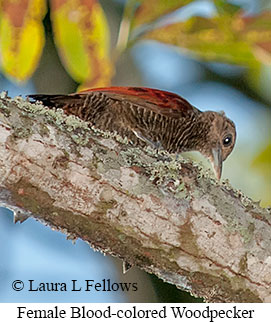
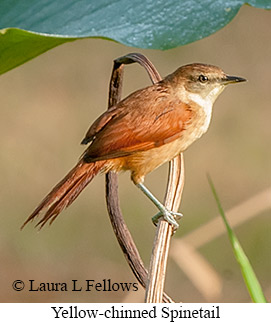
We'll depart very early for Hope Beach, about an hour's drive from the hotel. The mudflats are the best place to find Scarlet Ibis near Georgetown. The beach is also good for various shorebirds. Following a fairly short stop, we'll continue east to the Mahaica River for some birding along the river. We'll no doubt see Guyana's national bird, the bizarrely primitive-looking Hoatzin moving about in the riverside vegetation there. We could also see Long-winged Harrier, Crane Hawk, Green-and-rufous Kingfisher, Toco Toucan, the endemic Blood-colored Woodpecker, which only occurs near the coast, the attractive Spot-breasted Woodpecker, Black-crested Antshrike, Black-chinned Antbird, and Yellow-chinned Spinetail.
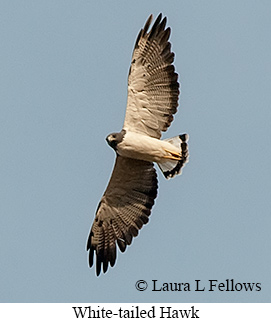
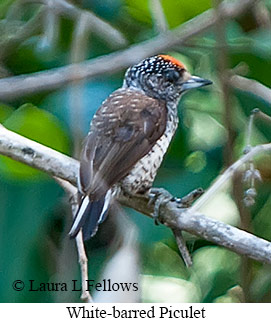
From there we'll drive a little farther south to a trail along the Abary River that leads out to some coastal mangroves. There we're likely to see the locally distributed Rufous Crab Hawk, which is commonly feeding around the mangroves. The trail to the mangroves skirts some dry woodland and open cultivated areas and provides habitat for White-bellied Piculet, White-barred Piculet, Spot-breasted Woodpecker, Black-crested Antshrike, Carib Grackle, and Yellow-hooded Blackbird. On our way back to Georgetown, we'll scan the extensive rice fields looking for raptors such as Long-winged Harrier, Snail Kite, and White Hawk.
After lunch we'll bird along the Demerara River and at the Garden of Eden outside Georgetown. We could find the rare and rather secretive Azure Gallinule and the shy skulking Little Cuckoo in this area. More likely are Gray Kingbird and Wing-barred Seedeater. The flowering plants in the Garden of Eden attract hummingbirds such as Green-tailed Goldenthroat, Fork-tailed Woodnymph, Glittering-throated Emerald, White-chinned Sapphire, and Blue-chinned Sapphire. Overnight at Cara Lodge.
DAY 3 - BOTANICAL GARDENS & IWOKRAMA FOREST RESERVE
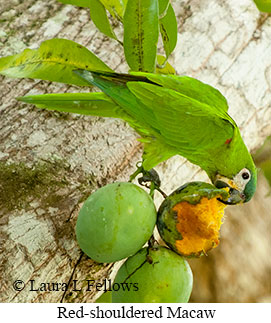
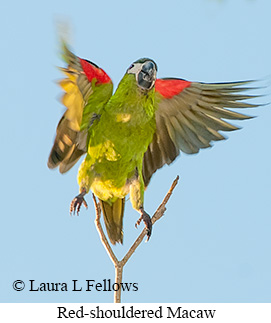
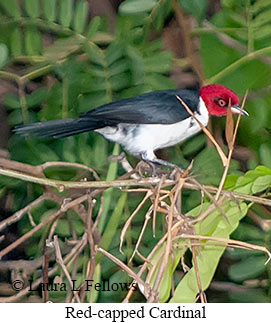
Very early this morning we'll visit the Georgetown Botanical Gardens, another good place to find the Blood-colored Woodpecker. We'll likely see several species of macaws and parrots as well as a variety of other birds before transferring to airport. This will be our best chance to see Festive Amazon. We should also see Golden-winged Parakeet, Yellow-crowned Amazon, Mealy Amazon, Orange-winged Amazon, Blue-and-yellow Macaw, and Red-shouldered Macaw. Other interesting possibilities include Crimson-crested Woodpecker, Straight-billed Woodcreeper, Cinereous Becard, White-headed Marsh Tyrant, Short-crested Flycatcher, Crested Oropendola, Red-capped Cardinal, and Turquoise Tanager.
After breakfast back at our hotel, we'll take a late morning flight from Georgetown to the southern town of Lethem, located on the Takutu River, which delineates the border between Guyana and Brazil. The flight takes about an hour and is typically on a 16-passenger turbo-prop plane. Because of the small size of the plane, the airline enforces a strict baggage weight limit of 20lbs that includes weighing not only our luggage but also our cameras and personal items. Anything above the weight limit entails an additional fee. Those with heavier luggage should pre-pay the excess baggage fee in advance. Our hotel in Georgetown can store extra baggage if desired.
During the flight we'll enjoy views of the nearly continuous lowland rainforest of the Amazon delta that separates coastal Guyana from the villages and lodges of the interior. We may well be able to see Kaieteur Falls, the world's highest free-falling waterfall, during the flight. Less enjoyable are views of the occasional mining operations that form ugly blotches in the expansive forest landscape.
Upon arrival in Lethem we'll meet our guide for the interior and immediately begin our 5-6 hour transfer to the Iwokrama Forest Reserve, which is located in the center of the country on the Essequibo River. We may stop if we see any interesting birds along the way, but we won't tarry long as we have a long drive and we'll be retracing our steps back to Lethem later in the tour.
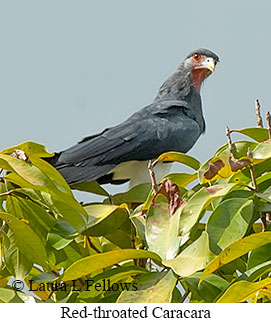
Once we arrive at our lodge at Iwokrama and check-in, we may time for some birding before dark. We'll quickly notice the striking Red-capped Cardinals, which are quite common around the clearing in front of the lodge, and we may see Red-throated Caracara perched nearby. If we have the time, we'll bird the mile-long Screaming Piha Trail near the lodge that leads through a forest of giant Mora trees. The trail is very flat and is easy walking. Birds we might see there include Bronzy Jacamar, Waved Woodpecker, Chestnut Woodpecker, Amazonian Antshrike, and Strong-billed Woodcreeper. Also possible are Red-mantled Howler Monkeys in the forest canopy or mid-story. Overnight at Iwokrama Field Station.
DAY 4 - IWOKRAMA FIELD STATION
After enjoying some early coffee or tea, we'll set out for Turtle Mountain Trail. The trailhead is reached by a half-hour boat trip up the Essequibo River. Along the river we're likely to see Blue-throated Piping-Guan and other species.
The first section of the trail is mostly level and goes through seasonally flooded varzea forest where likely birds include Black Nunbird, Helmeted Pygmy-Tyrant, and Tiny Tyrant-Manakin. Also possible for the lucky few is Guianan Red-Cotinga. A family of Giant Otters is usually present in the oxbow lagoon.
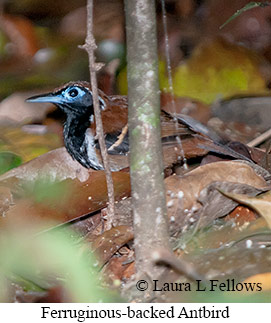
We'll eventually reach a tent camp used on occasion by researchers. There we'll eat a box breakfast while keeping an eye out for Red-fan Parrots, which are most easily seen around the clearing. After breakfast, we'll follow the trail gradually uphill into terra firme forest. The best birding is before the steepest section below the top. In the forest a group of shy Gray-winged Trumpeters often appears before scurrying off. We'll be looking for the striking near-endemic Red-and-black Grosbeak, most likely found about half way up the trail. Other likely birds we may see include Spot-tailed Antwren, Todd's Antwren, Ferruginous-backed Antbird, Rufous-throated Antbird, Spotted Antpitta, Cinnamon-rumped Foliage-gleaner, McConnell's Flycatcher, Buff-cheeked Greenlet, and Yellow-green Grosbeak. We'll be back at the field station in time for lunch.
During the afternoon we'll bird the main dirt road that leads through primary rainforest by vehicle. The birding is excellent as traffic is minimal because currently the only way to cross the Essequibo River is on a pontoon barge-like ferry. This could change in future as the government is still considering a major upgrade to the road that includes building a bridge over the river and paving the road, which would bring frequent traffic by heavy oil tankers coming up from Brazil. If that occurs, there will be concomitant development such as gas stations, fast-food restaurants, and convenience stores along the road. So far, strong opposition by environmental groups has delayed these government plans. Also standing in the way of this plan is the fact that sections of the road leading to Lethem are underwater for much of the rainy season.
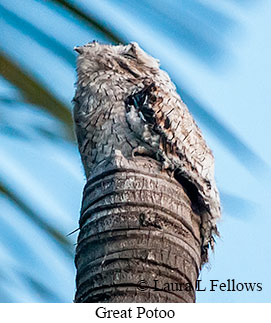
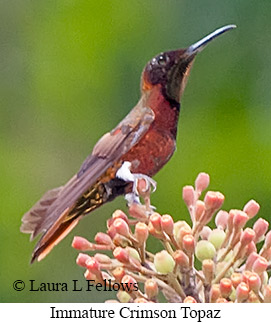
During our birding excursion along the road we can expect to see specials such as Crimson Topaz, Guianan Puffbird, Paradise Jacamar, Black-spotted Barbet, Green Aracari, Guianan Toucanet, Red-throated Caracara, and Caica Parrot. Other interesting possibilities we're likely to see include Yellow-tufted Woodpecker, Red-necked Woodpecker, Bat Falcon, Chestnut-fronted Macaw, Red-and-green Macaw, Black-headed Parrot, Silvered Antbird, Purple-throated Fruitcrow, and Green Oropendola. Shortly before dusk we'll stop at Mile 26 and wait for dark. Jaguars are regularly seen crossing the road at this spot. As night falls, we'll look for nocturnal birds such as Blackish Nightjar, Amazonian Pygmy-Owl, Black-banded Owl, and Common Potoo before returning to the lodge for dinner. Overnight at Iwokrama Field Station.
DAY 5 - MORI SCRUB & ATTA RAINFOREST
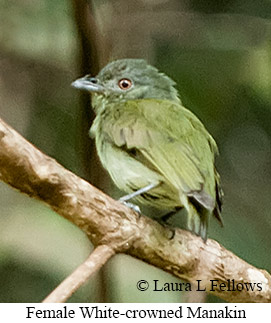
We'll depart very early for an area known as Mori Scrub, which is located along the main road through the reserve. The seasonally flooded, sandy habitat along the first half of this loop trail harbors several very localized birds. During fall months the trail is mostly flooded and requires rubber boots. By January it's mostly dry. Birds of special interest along the trail include White-chinned Sapphire, Spotted Puffbird, Rufous-bellied Antwren, Rufous-crowned Elaenia, Helmeted Pygmy-Tyrant, Black Manakin, White-crowned Manakin, and Red-shouldered Tanager. The southern half of the loop trail is on higher ground through dry forest where the secretive Rufous-vented Ground-Cuckoo can sometimes be seen.
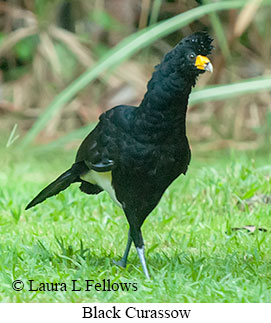
We'll reach the end of the loop trail by mid-morning and then continue south toward southern section of the Iwokrama reserve. We'll do some birding along the road en route. We'll arrive at the very nice Atta Rainforest Lodge by late morning. After arrival, we'll relax and do a little birding around the lodge. We could well see Black Curassows, which regularly appear in the clearing around the lodge.
We'll enjoy a leisurely lunch and some birding around the lodge. Mid-afternoon we'll drive a little south to a trail leading into the forest. A rather short but somewhat uphill ½-hour walk leads to the canopy walkway, which consists of 5 platforms mounted on trees and interconnected by a series of suspended walkways. The walkway is especially good for seeing macaws, parrots, woodpeckers, and antbirds of the forest canopy. Specialty birds we expect to see include Black Nunbird, Paradise Jacamar, Black-spotted Barbet, Guianan Toucanet, Caica Parrot, Spot-tailed Antwren, Todd's Antwren, Ash-winged Antwren, Ferruginous-backed Antbird, Guianan Red-Cotinga, and Blue-backed Tanager. Other possibilities include Amazonian Motmot, Waved Woodpecker, Chestnut Woodpecker, Ringed Woodpecker, Red-necked Woodpecker, Painted Parakeet, Golden-winged Parakeet, Bronze-winged Parrot, Dusky Parrot, Mouse-colored Antshrike, Black-throated Antbird, Amazonian Barred-Woodcreeper, Gray-crowned Flycatcher, Ruddy-tailed Flycatcher, Pompadour Cotinga, Slaty-capped Shrike-Vireo, Long-billed Gnatwren, Yellow-winged Tanager, Spotted Tanager, Blue Dacnis, Purple Honeycreeper, and Slate-colored Grosbeak. We'll stay until dark to look for White-winged Potoo in the forest canopy. Overnight at Atta Rainforest Lodge.
DAY 6 - ATTA RAINFOREST & SURAMA
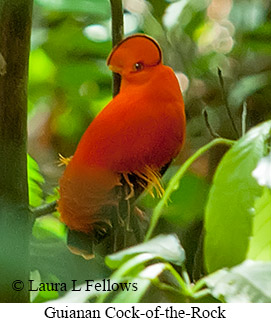
Very early this morning, we'll drive a short distance to Cock-of-the-Rock Trail and walk about 20 minutes slightly uphill through secondary forest to an area of large boulders where Guianan Cock-of-the-Rock regularly nests. The males can be seen displaying on a lek near this site. It's best to be there by 5:30am when the males are most active. On our walk back to the road, we could see Amazonian Motmot, Yellow-billed Jacamar, Painted Parakeet, White-plumed Antbird, Rufous-throated Antbird, and Spotted Antpitta.
We'll return to the lodge for breakfast and then spend some time birding around the clearing and along the road. Target species there include Marail Guan, Guianan Violaceous Trogon, Black-spotted Barbet, Green Aracari, Guianan Toucanet, Dusky Parrot, and Painted Tody-Flycatcher.
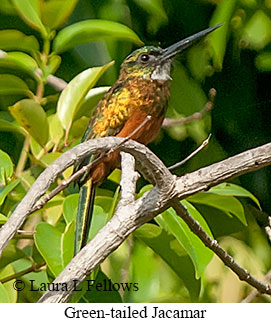
In late morning we'll drive the short distance to Surama Village for lunch at a rustic lodge. After lunch, we'll bird the area around the village. We'll especially looking for the Cayenne Jay, which is only found there. Other birds we could find are Brown-throated Parakeet, Golden-winged Parakeet, Green-tailed Jacamar, Green Aracari, Red-breasted Blackbird, and Finsch's Euphonia. At dusk we'll drive out into the savanna to look for night birds along the road. We're likely to see Nacunda Nighthawk, Least Nighthawk, Lesser Nighthawk, Band-tailed Nighthawk, Common Pauraque, White-tailed Nightjar, and Common Potoo. Overnightight at Surama Lodge.
DAY 7 - SURAMA, BURRO BURRO RIVER, ROCK VIEW
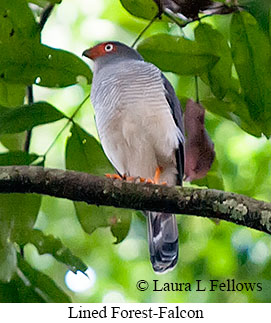
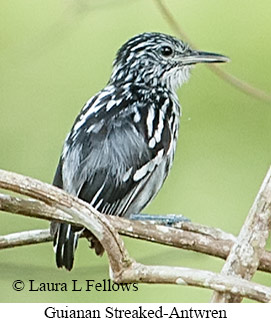
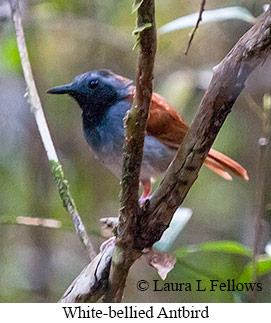
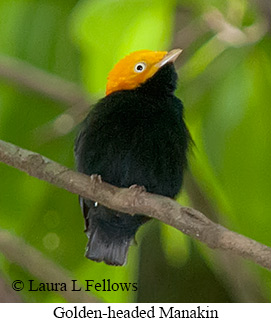
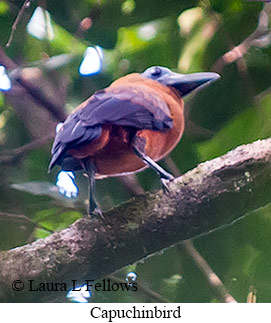
Early this morning we'll drive west from Surama to the nearby Burro-Burro River, arriving by 6:00 AM. We'll then float down the slow-moving river in a small boat looking for the near-endemic Guianan Streaked-Antwren, which lives almost exclusively along river courses. After a box breakfast, we'll spend the rest of the morning birding the dirt track through secondary forest back toward Surama on foot. This track is wide and flat so it's easy walking. The forest offers some great birding with possibilities that include Marail Guan, Cream-colored Woodpecker, Lined Forest-Falcon, Guianan Slaty-Antshrike, White-flanked Antwren, White-fringed Antwren,Rufous-bellied Antwren, Guianan Warbling-Antbird, Ferruginous-backed Antbird, Gray Antbird, Dusky Antbird, White-browed Antbird, Black-chinned Antbird, White-bellied Antbird, Chestnut-rumped Woodcreeper, Capuchinbird, White-crowned Manakin, Golden-headed Manakin, Coraya Wren, and Guira Tanager.
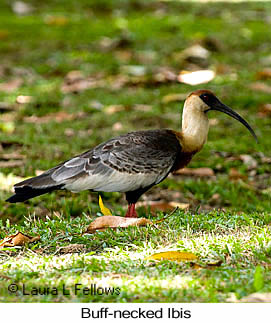
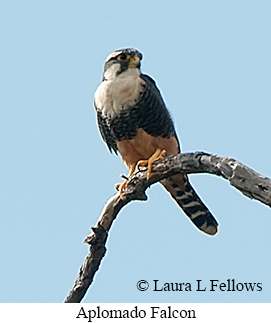
That afternoon we'll depart Surama and drive south through the Rupununi Savanna to our next destination. The habitat is mainly open scrub and grassland with one marshy area along the road. Birds we should see along the road include Buff-necked Ibis, Pearl Kite, Green-tailed Jacamar, Aplomado Falcon, Black-crested Antshrike, Guianan Warbling-Antbird, Cinnamon Attila, Amazonian Scrub-Flycatcher, and Large-billed Seed-Finch. The drive takes 3-4 hours, but we may have time to stop in at the Rock View lodge to spend a little time viewing hummingbirds at their feeders. We'll arrive at Karanambu by dinner time.
The savanna around Karanambu Lodge is a great place for nightjars, so we'll go out looking for them at dusk. Up to 8 species are possible. The likeliest are Band-tailed Nighthawk, and White-tailed Nightjar. Overnight at Karanambu Lodge.
DAY 8 - KARANAMBU
We'll be up very early to visit a lek of the very strange Capuchinbird located near the lodge. Sometimes a local tracker goes out and finds a Giant Anteater for us to see. These fascinating creatures are nocturnal, so if he has one located, we'll go looking for that first.
After returning to the lodge for breakfast, we'll set out again for a morning of birding in the savanna and tracts of riparian woodland along the Rupununi River. Our main target birds are the locally distributed Bearded Tachuri and the range-restricted Red-legged Tinamou, White-bellied Piculet, and Pale-tipped Tyrannulet. Possibilities in the woodland along the river include Rufous-throated Sapphire, Spotted Puffbird, Golden-spangled Piculet, Plain-crowned Spinetail, and Pale-bellied Tyrant-Manakin.
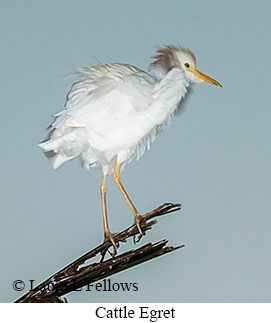
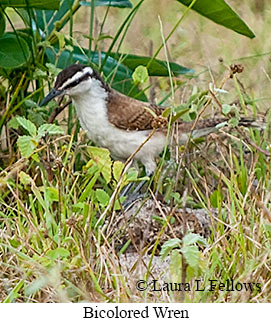
Karanambu is a large ranch with diverse habitats including extensive savanna, patches of woodland, and marshes so a large variety of other birds await our attention. Notable examples are include Undulated Tinamou, Crane Hawk, Spotted Puffbird, Black Nunbird, Green-tailed Jacamar, Crimson-crested Woodpecker, Lineated Woodpecker, Cream-colored Woodpecker, Bat Falcon, Northern Slaty-Antshrike, Black-chinned Antbird, White-bellied Antbird, Buff-throated Woodcreeper, Straight-billed Woodcreeper, Yellow-chinned Spinetail, Blue-backed Manakin, Forest Elaenia, Cinnamon Attila, Grayish Mourner, Swainson's Flycatcher, Rufous-browed Peppershrike, Ashy-headed Greenlet, Bicolored Wren, Buff-breasted Wren, and Grassland Yellow-Finch. In marshy areas we should see Crested Doradito. The wetlands are also home to Muscovy Duck, Azure Gallinule, Maguari Stork, Rufescent Tiger-Heron, and Pinnated Bittern along with a variety of ther herons, egrets and kingfishers. There are plenty of species to hold our attention.
In late afternoon plan on taking a boat trip on the river. Our main target species along the river is the range-restricted and rather shy Crestless Curassow. We may also see Green-and-rufous Kingfisher as well as Spectacled Caimans, Black Caimans, and Giant River Otters. We sometimes see monkeys in the trees along the river. Guianan Squirrel Monkey, Guianan Bearded Saki, White-faced Saki,and Guiana Red Howler are all possible. At sunset we may watch as the flowers of Giant Water Lilies open on the lagoon while Band-tailed Nightjars and bats hawk insects overhead. After dark we'll look for nightjars again along the nearby grass landing strip. Overnight at Karanambu Lodge.
DAY 9 - KARANAMBU & GEORGETOWN
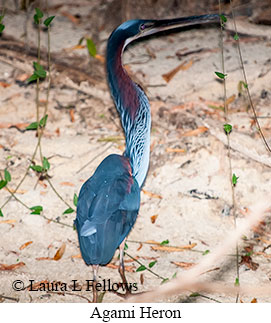
Early this morning we'll check the flooded wooded area down by the river hoping to see the unobtrusive Agami Heron. We may alsosee White-bellied Antbird, Scale-backed Antbird, Helmeted Pygmy-Tyrant, Short-crested Flycatcher, and Blue-backed Manakin in this same area. After early lunch, we'll drive to Lethem to connect with our late afternoon flight to Georgetown. Overnight at Cara Lodge in Georgetown.
DAY 10 - END OF TOUR
Tour ends with breakfast at the hotel. After breakfast transfer to airport for international flights home (not included in tour price).
|
 Tour Overview